How Early-Life Adversity Alters Mitochondrial Function and Metabolic Health: What the Science Shows
Early-life adversity rewires mitochondrial energy production, producing hypermetabolism and elevated mitochondrial DNA content that increase lifelong disease risk — and the type of adversity matters, not just its total amount.
How Early-Life Adversity Alters Mitochondrial Function and Metabolic Health: What the Science Shows
Early-life adversity (ELA) is defined as any experience of abuse, neglect, caregiver loss, or chronic socioeconomic threat occurring during childhood that disrupts normal neurodevelopment and physiological stress regulation. A growing body of peer-reviewed evidence now shows that these experiences leave a measurable imprint on mitochondria — the organelles responsible for producing the cellular energy currency ATP — and that this mitochondrial remodelling is a primary mechanism through which psychological stress is converted into lasting biological disease risk.
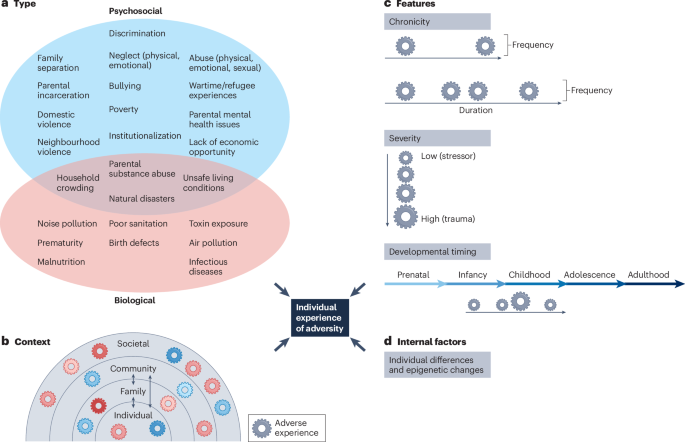
A landmark 2021 review published in the journal Mitochondrion by Zitkovsky, Daniels, and Tyrka found that individuals with a history of ELA show increased mitochondrial DNA (mtDNA) content and altered cellular energy demands, suggesting the cells are working harder — a state researchers call hypermetabolism. More recently, The Hindu highlighted new study findings confirming that this hypermetabolic state, while adaptive in the short term, becomes harmful over a lifetime. Critically, the researchers found that the type of adversity experienced — not merely its cumulative burden — is uniquely related to distinct patterns of mitochondrial dysfunction.
At a Glance: How Different Forms of Early-Life Adversity Compare in Their Mitochondrial and Metabolic Effects
The table below synthesises what current science shows about several major categories of ELA and their documented biological footprint, drawing on the peer-reviewed literature:
| Type of Early-Life Adversity | Documented Mitochondrial Effect | Associated Long-Term Metabolic/Health Risk | Evidence Strength |
|---|---|---|---|
| Physical or sexual abuse | Elevated mtDNA copy number; increased oxidative stress markers | Major depressive disorder, PTSD, cardiovascular disease | Strong (multiple clinical studies) |
| Neglect / emotional deprivation | Altered mitochondrial morphology; reduced ATP synthesis efficiency | Obesity, immune dysregulation, anxiety disorders | Moderate (preclinical + early clinical) |
| Caregiver loss / bereavement | Dysregulated HPA-axis → mitochondrial stress signalling | Increased all-cause mortality, substance use disorders | Moderate (epidemiological) |
| Chronic socioeconomic stress (poverty) | Hypermetabolic state; elevated cellular energy demand | Type 2 diabetes, ischemic heart disease, cancer risk | Strong (ACE study + meta-analyses) |
| Cumulative / polyvictimisation | Compounded mtDNA alterations; systemic inflammation | Bipolar disorder, accelerated biological ageing | Emerging (dose-response data) |
While cumulative adversity compounds risk, the pathway to mitochondrial dysfunction differs meaningfully by adversity type — a nuance with direct implications for both clinical screening and therapeutic targeting.
What exactly are mitochondria, and why do they matter for stress biology?
Mitochondria are double-membrane organelles present in virtually every human cell that generate approximately 90% of the body's usable energy through a process called oxidative phosphorylation. Beyond energy production, they regulate calcium signalling, apoptosis (programmed cell death), reactive oxygen species (ROS) production, and the release of cytokines that modulate immune function.
What makes mitochondria uniquely relevant to stress biology is their position at the convergence of multiple physiological systems. The 2021 Mitochondrion review explains that mitochondria interact dynamically with the central nervous system, the endocrine system (particularly the hypothalamic-pituitary-adrenal, or HPA, axis), and the immune system. When the brain perceives threat — whether a physically dangerous environment or chronic emotional neglect — it triggers cortisol and adrenaline release. These stress hormones directly alter mitochondrial membrane potential, shift the balance between energy production and ROS generation, and can even influence the replication rate of mitochondrial DNA.
This bidirectional relationship means that stress does not merely exhaust the body's energy reserves; it actively reprogrammes the machinery that produces energy in the first place. In a child whose nervous system is still undergoing experience-dependent growth and plasticity, these reprogramming effects can become structurally embedded in ways that persist into adulthood.
What is hypermetabolism, and how does early-life adversity cause it?
Hypermetabolism is a state in which cells consume energy at a rate significantly above baseline, often accompanied by elevated resting metabolic rate, increased mitochondrial activity, and higher-than-normal production of reactive oxygen species. In clinical settings, hypermetabolism is well-documented after severe burns or sepsis. The Hindu's coverage of recent research highlights an emerging finding: ELA can induce a chronic, low-grade version of this same state.
The proposed mechanism unfolds roughly as follows. During periods of acute threat in childhood, the body mounts an adaptive stress response: the HPA axis floods the system with glucocorticoids, mitochondria upregulate energy production to fuel the fight-or-flight response, and mtDNA copy number may increase to meet heightened cellular demand. In a healthy, time-limited stress response, these changes reverse once the threat passes.
In children experiencing chronic or repeated adversity, however, the stress response never fully resolves. The mitochondria remain in a state of heightened activation. Over months and years, this sustained overactivity generates excess ROS, promotes mitochondrial DNA damage, and dysregulates the very signalling pathways — including inflammatory cytokine networks — that mitochondria are supposed to help regulate. The result is a metabolic phenotype that is simultaneously energy-hungry and inefficient: the cell burns more fuel but produces less usable ATP per unit of substrate consumed.
The Zitkovsky et al. review notes that preclinical evidence — primarily from animal models of early stress — consistently shows alterations in mitochondrial function and structure linked to both early stress exposure and systemic biological dysfunction. Early clinical studies in humans support that increased mtDNA content is measurable in individuals with a history of ELA, providing a potential biomarker for this chronic hypermetabolic state.
Does the type of adversity matter, or is it just about how much a child suffers?
This is one of the most scientifically important questions in the field, and the answer is nuanced. For decades, the dominant framework was a dose-response model: more adverse childhood experiences (ACEs) equal greater health risk. The original ACE study by Felitti and colleagues (1998), cited in the Mitochondrion review, found a dose-dependent relationship between ACE score and outcomes including substance abuse, depression, ischemic lung disease, and cancer. This framework remains valid and clinically useful.
However, the newer research reported by The Hindu adds an important qualification: the effects of adversity are not solely cumulative. The type of adversity experienced may be uniquely related to mitochondrial function. This means that physical abuse, emotional neglect, and poverty-related chronic stress may each leave a distinct mitochondrial signature — not just a proportionally larger version of the same signature.
Why would this be? Different forms of adversity activate different stress-response pathways. Physical threat predominantly activates the sympathetic nervous system and catecholamine release. Emotional neglect — the absence of nurturing rather than the presence of harm — may more profoundly disrupt oxytocin and social bonding circuits, which have their own downstream effects on mitochondrial regulation. Socioeconomic stress operates through chronic, low-grade cortisol elevation combined with nutritional insufficiency, which impairs the substrate availability that mitochondria need to function efficiently.
Understanding these distinctions matters clinically because it suggests that a one-size-fits-all intervention targeting "adversity" in general may be less effective than approaches tailored to the specific biological pathways activated by particular adversity types. It also means that researchers need to move beyond simple ACE-score tallies when studying mitochondrial outcomes.
What are the long-term health consequences of adversity-driven mitochondrial dysfunction?
The downstream health consequences documented in the literature are broad and serious. Meta-analyses cited in the Mitochondrion review confirm that ELA increases risk for multiple conditions.
Cardiometabolic disease represents one of the most robustly documented outcomes. Obesity and cardiovascular disease show strong associations with early adversity across multiple meta-analyses. The mitochondrial link is mechanistically plausible: chronic hypermetabolism promotes systemic inflammation, insulin resistance, and dyslipidaemia — all established cardiovascular risk factors.
Psychiatric disorders are equally well-established. ELA is associated with major depressive disorder (MDD), post-traumatic stress disorder (PTSD), anxiety disorders, bipolar disorder, and substance use disorders. Mitochondrial dysfunction in neurons may contribute directly to these outcomes, given that the brain is the most energy-demanding organ in the body and is therefore acutely sensitive to disruptions in cellular energy supply.
Immune dysregulation and cancer have both been linked to childhood adversity. Mitochondria play a central role in immune cell activation and apoptosis; when their function is chronically altered, immune surveillance can be compromised.
Accelerated biological ageing represents another consequence. Elevated ROS production from hyperactive mitochondria damages DNA, including telomeres — the protective caps on chromosomes whose shortening is a marker of biological ageing. Several studies have found shorter telomere length in individuals with high ACE scores, suggesting that adversity-driven mitochondrial overactivity may accelerate cellular ageing.
Epidemiological data cited in the Mitochondrion review also show greater all-cause mortality risk associated with adverse childhood experiences, consistent with the broad systemic impact of mitochondrial dysregulation across multiple organ systems.
It bears emphasising that these are population-level risk associations, not deterministic outcomes. Many individuals who experience significant ELA do not develop these conditions, and resilience factors — including social support, genetic variation in stress-response genes, and access to therapeutic intervention — meaningfully moderate the biological impact of adversity.
How does childhood development amplify vulnerability to mitochondrial stress?
Childhood is a critical period during which the brain undergoes extensive experience-dependent growth and plasticity. This developmental sensitivity is precisely what makes early adversity so biologically potent.
The Mitochondrion review notes that children rely on caregivers to meet both physical and emotional needs, meaning the early environment exerts a profound influence on the development of stress-response systems. When that environment is chronically threatening or depriving, the developing nervous system essentially calibrates itself for a dangerous world — setting stress-response thresholds lower, keeping mitochondria in a more activated state, and prioritising immediate survival over long-term metabolic efficiency.
This calibration is not a flaw; it is an adaptive response to the environment the child actually inhabits. The problem arises when the child grows into an adult living in a safer environment, but whose mitochondria and stress-response systems remain tuned for chronic threat. The hypermetabolic state that was adaptive in a dangerous childhood becomes a source of chronic oxidative stress, inflammation, and metabolic dysregulation in a relatively safe adulthood.
Dynamic interactions between neural circuitry, genetics, and environmental stressors produce these physiologic changes early in life, with downstream impact on health outcomes across the lifespan, as the Zitkovsky et al. review describes. The implication is that interventions need to address not just current stressors but the biological legacy of past ones.
Can mitochondria be targeted therapeutically after early-life adversity?
This is an area of active and genuinely exciting research, though the honest answer is that solid clinical evidence for mitochondria-targeted interventions in ELA populations is still limited. The Mitochondrion review explicitly calls for further research investigating mitochondria as a potential therapeutic target following ELA — a call that reflects both the promise of the approach and the current gaps in the evidence base.
Several candidate strategies are under investigation.
Antioxidant supplementation addresses the excess ROS generated by hypermetabolic mitochondria. Coenzyme Q10, N-acetylcysteine, and mitochondria-targeted antioxidants like MitoQ have theoretical appeal. However, clinical trial data in ELA-specific populations are sparse, and indiscriminate antioxidant supplementation can interfere with beneficial ROS signalling.
Physical activity is one of the most robustly evidence-supported interventions for improving mitochondrial function across populations. Aerobic exercise promotes mitochondrial biogenesis (the creation of new mitochondria), improves oxidative phosphorylation efficiency, and reduces systemic inflammation. While no large trials have specifically tested exercise as a mitochondrial intervention in ELA populations, the mechanistic rationale is strong.
Psychotherapy and trauma-focused interventions reduce HPA-axis dysregulation and inflammatory markers. Trauma-focused cognitive behavioural therapy (TF-CBT) and other evidence-based trauma therapies show measurable benefits. If mitochondrial dysfunction is downstream of chronic stress-hormone exposure, then effective trauma treatment should, in theory, reduce the mitochondrial burden — though direct measurement of mitochondrial outcomes in psychotherapy trials is rare.
Nutritional interventions target the specific micronutrients mitochondria require. B vitamins (particularly B2, B3, and B12), magnesium, iron, and alpha-lipoic acid serve as cofactors for oxidative phosphorylation. Chronic socioeconomic stress is often accompanied by nutritional insufficiency, which may compound mitochondrial dysfunction. Addressing nutritional gaps is a low-risk, accessible intervention that deserves more attention in ELA research. Readers interested in the metabolic role of magnesium specifically may find our article on magnesium glycinate for sleep and metabolic health relevant.
Pharmacological approaches are emerging. Several existing drugs — including metformin, which activates AMPK and modulates mitochondrial function — are being studied for their potential to correct adversity-related metabolic dysregulation. This research is at an early stage and should not be interpreted as a clinical recommendation.
The broader point is that mitochondria represent a convergence point where multiple intervention strategies — psychological, nutritional, pharmacological, and behavioural — could theoretically act in concert. The challenge for researchers is designing trials that measure mitochondrial outcomes directly, rather than relying solely on downstream clinical endpoints.
What does mitochondrial DNA content tell us, and why is it measured?
Mitochondrial DNA (mtDNA) copy number — the number of mtDNA molecules per cell — is increasingly used as a proxy biomarker for mitochondrial function and cellular energy demand. Unlike nuclear DNA, which exists in two copies per cell, each cell contains hundreds to thousands of copies of mtDNA. The copy number is regulated dynamically in response to energy demand: cells that need more energy tend to have more mitochondria and higher mtDNA copy number.
The finding that individuals with ELA show increased mtDNA content is consistent with the hypermetabolism hypothesis: their cells are signalling a need for more energy production capacity. However, elevated mtDNA copy number is not straightforwardly "good" or "bad" — it is a marker of a system under strain. In the context of chronic stress, elevated mtDNA copy number may reflect compensatory upregulation in the face of mitochondrial damage, rather than healthy adaptation.
Measuring mtDNA copy number from blood samples is relatively accessible compared to direct measures of mitochondrial respiration (which typically require fresh tissue biopsies). This makes it a practical candidate biomarker for population-level studies of ELA and metabolic health — though standardisation of measurement methods across laboratories remains a challenge.
How does this research connect to broader metabolic health in India and South Asia?
The relevance of this research extends globally, but deserves particular attention in the Indian context. India carries a disproportionate burden of both adverse childhood experiences — including poverty-related chronic stress, child labour, and household violence — and the metabolic diseases that ELA predisposes to, including type 2 diabetes, cardiovascular disease, and depression.
South Asians as a population show a higher propensity for insulin resistance and visceral adiposity at lower body mass indices than European populations, a phenomenon sometimes called the "thin-fat Indian" phenotype. While the genetic and dietary contributors to this phenotype are well-studied, the role of early-life adversity and mitochondrial programming has received comparatively little attention in Indian research contexts.
The mitochondrial framework offers a biologically coherent explanation for why chronic psychosocial stress — including the stress of poverty, caste-based discrimination, and household instability — might compound metabolic vulnerability in populations already at elevated cardiometabolic risk. It also suggests that metabolic health interventions in India need to account for the psychosocial and developmental history of patients, not just their current diet and activity levels.
For readers interested in evidence-based approaches to metabolic health, our articles on berberine for insulin resistance and carb blocker supplements for post-meal glucose control discuss nutritional strategies that may be relevant — though these should be understood as adjuncts to, not substitutes for, addressing the upstream psychosocial determinants of metabolic dysfunction.
What are the key gaps in current research?
The science connecting ELA to mitochondrial dysfunction is compelling but still maturing. Several important gaps deserve acknowledgement.
Causality versus correlation remains a central challenge. Most human studies in this field are observational. Demonstrating that ELA causes mitochondrial dysfunction — rather than that both share common genetic or environmental confounders — requires longitudinal designs and, ideally, natural experiments or intervention studies.
Specificity of mitochondrial measures presents another limitation. mtDNA copy number is an imperfect proxy. Direct measures of mitochondrial respiration, membrane potential, and ROS production provide richer data but are technically demanding. Expanding the toolkit of accessible mitochondrial biomarkers is a research priority.
Type-specific adversity research remains underdeveloped. As the recent findings reported by The Hindu highlight, the field needs to move beyond cumulative ACE scores toward studies that can distinguish the mitochondrial signatures of different adversity types. This requires larger samples and more granular adversity assessment.
Intervention trials are scarce. The call by Zitkovsky et al. for research into mitochondria as a therapeutic target remains largely unanswered. Randomised controlled trials testing mitochondria-targeted interventions in ELA populations are needed.
Diverse populations have been underrepresented. The majority of existing clinical research has been conducted in Western, educated, industrialised, rich, and democratic (WEIRD) populations. Replication in South Asian, African, and Latin American populations — where ELA prevalence and metabolic disease burden are both high — is essential.
What should clinicians and individuals take away from this research?
For clinicians, the mitochondrial framework for ELA offers several practical implications. Routine clinical assessment of adult patients with metabolic disease, depression, or cardiovascular risk should include a trauma and adversity history. Patients with high ACE scores may benefit from more aggressive metabolic monitoring and from referral to trauma-informed mental health care, not just pharmacological management of their somatic symptoms.
For individuals who have experienced early adversity, this research offers a biological explanation for health challenges that are sometimes dismissed as psychological or self-inflicted. Understanding that childhood stress can physically alter cellular energy metabolism — and that this alteration is measurable, not imagined — can reduce self-blame and motivate engagement with evidence-based interventions.
The research also reinforces the importance of early intervention. If mitochondrial reprogramming occurs during sensitive developmental periods, then reducing adversity exposure in childhood — through social policy, family support programmes, and trauma-informed schooling — is likely to be more effective than attempting to reverse established mitochondrial dysfunction in adulthood. Prevention, in this domain as in most of medicine, is more powerful than cure.
The science is clear that the biological consequences of early adversity are real, measurable, and serious. The mitochondrial pathway is one of the most mechanistically coherent explanations yet identified for how childhood experience becomes adult disease — and it deserves both the research investment and the clinical attention it is beginning to receive.
Last verified: 2026-06-23