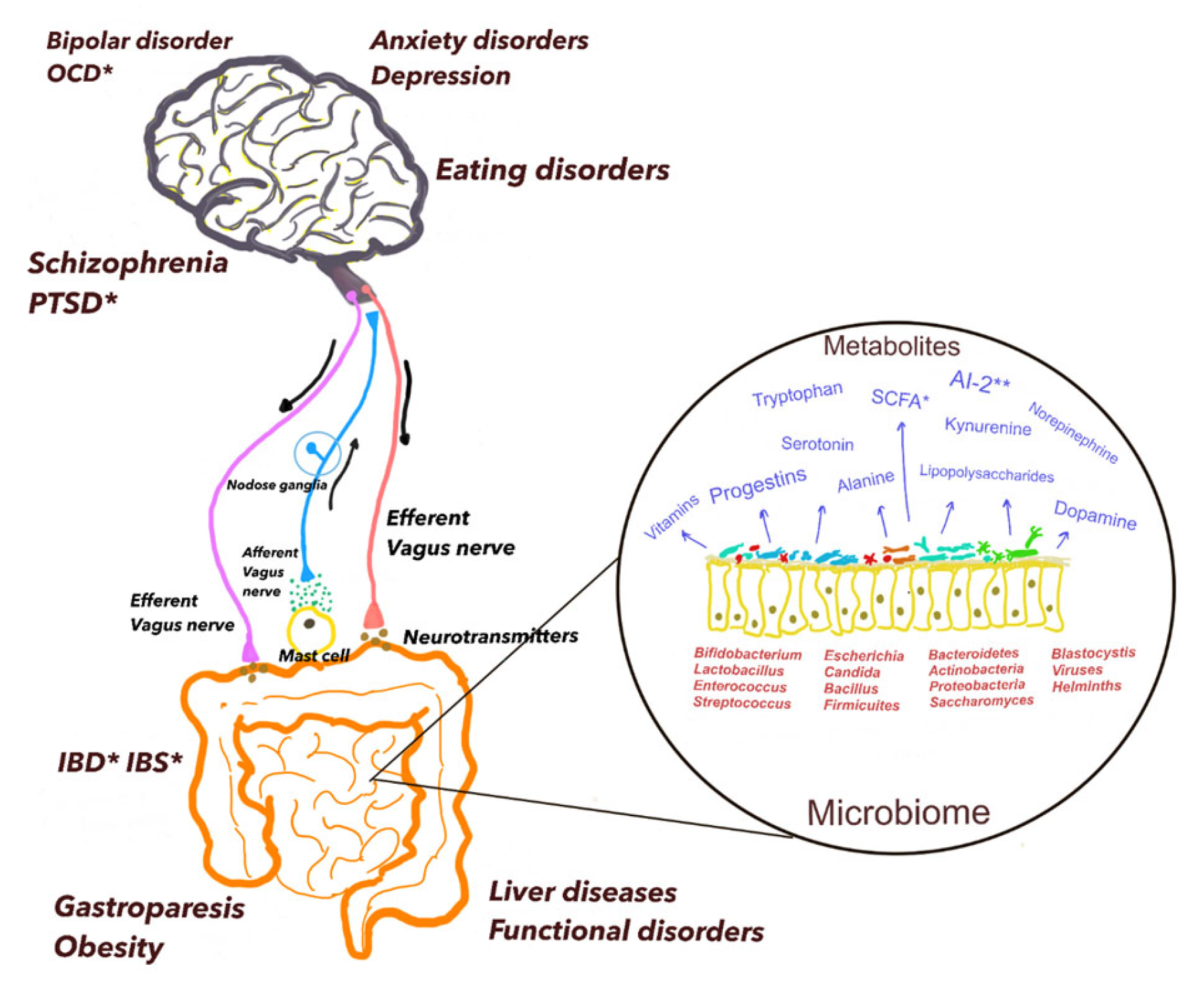
The Gut-Brain Axis in Supplements: What the Science Shows About Psychobiotics and Microbial Metabolites (2026)
The gut-brain axis is real and bidirectional, but most psychobiotic supplements still lack the human clinical trial data needed to back their mental health claims.
The Gut-Brain Axis in Supplements: What the Science Shows About Psychobiotics and Microbial Metabolites (2026)
The gut-brain axis is a bidirectional biochemical signalling network between the gastrointestinal tract's microbial space and the central nervous system — and as of 2026, the scientific consensus is that this connection is real, consequential, and commercially significant. Christopher Lowry, an integrative physiology professor at University of Colorado Boulder who has spent 25 years studying how bacteria communicate with the brain, describes the link as running "in both directions": a healthy gut can improve mental vitality, and mental resilience in turn strengthens gut health. Gut-brain health claims on supplement packaging rose 11% between 2020 and 2025, and gut health now holds 6.2% market share of the global supplements industry, growing at 6.5% annually. The challenge for consumers — and for brands — is separating the solid science from the marketing noise.
Before diving into the mechanisms, here is a snapshot of the main supplement categories now targeting the gut-brain axis, what the evidence looks like for each, and what to watch out for:
| Supplement Category | Mechanism of Action | Evidence Stage (2026) | Key Caution |
|---|---|---|---|
| Probiotics (psychobiotics) | Deliver live bacteria that modulate serotonin neurons, reduce neuroinflammation, and interact via the vagus nerve | Human RCTs emerging; first NIH-funded psychiatry trial completed 2026 | L. rhamnosus JB-1 failed in human trials despite strong animal data |
| Prebiotics | Fermentable fibres (e.g., inulin, FOS) feed beneficial gut bacteria, indirectly supporting microbial metabolite production | Moderate human evidence for microbiome diversity; limited direct mood data | Effect size on mood outcomes remains small in most trials |
| Postbiotics | Bioactive compounds (SCFAs, peptides, cell-wall fragments) produced after microbial fermentation | Early-stage; some clinical studies on mood support (e.g., Morinaga postbiotic strain) | Standardisation of postbiotic preparations is inconsistent across brands |
| Psychobiotic blends | Combine pre- and probiotic strains targeting cortisol/stress pathways (e.g., Novonesis MindAble 1714) | Company-sponsored clinical data; independent replication limited | Strain specificity matters enormously — generic "probiotic" blends may not replicate results |
| Soil-derived bacteria (e.g., M. vaccae) | Selectively activates serotonin neurons; suppresses inflammation linked to anxiety | Animal and early human data; Kioga biotech in seed funding stage | Not yet commercially available as a validated supplement |
What exactly is the gut-brain axis, and why does it matter for mental health?
The gut-brain axis is a complex, bidirectional communication system that connects the enteric nervous system of the gastrointestinal tract with the brain via neural, hormonal, and immunological pathways. The primary physical highway is the vagus nerve, which carries signals in both directions between the gut and the brainstem. The axis also operates through the bloodstream — gut bacteria produce or stimulate the production of neurotransmitters including serotonin, dopamine precursors, and gamma-aminobutyric acid (GABA), all of which influence mood, cognition, and stress responses.
The human gut hosts trillions of microorganisms — bacteria, fungi, archaea, and viruses — collectively encoding more genes than the human genome itself. Research published in Experimental Physiology in 2026 describes this space as an "emerging approach in mental health modulation," noting that microbial metabolites can cross the blood-brain barrier, modulate neuroinflammation, and alter the hypothalamic-pituitary-adrenal (HPA) axis, the body's central stress-response system.
Lowry's entry point into this field came through Mycobacterium vaccae, a soil bacterium first found in the 1970s in mud near Lake Kyoga in Uganda. Immunologists investigating why leprosy vaccines worked better in people living near the lake discovered the bacterium helped regulate the immune system by suppressing inflammation. Early 2000s trials on lung cancer patients found it also improved emotional health. When Lowry — then a neuroscientist studying serotonin — heard about a single bacterium influencing mental state, he extrapolated: if one strain can do that, what are trillions of gut microbes doing collectively?
His subsequent research found that M. vaccae selectively activates serotonin neurons in brain regions associated with antidepressant effects and suppresses the neuroinflammation linked to anxiety and stress-related disorders. This is not a fringe finding — it is the mechanistic foundation now underpinning an entire category of commercial supplements.
What is a psychobiotic, and how is it different from a regular probiotic?
A psychobiotic is a live microorganism that, when ingested in adequate amounts, produces a mental health benefit in the host — either by directly influencing neurotransmitter production, modulating the stress-response axis, or reducing neuroinflammation. The term was coined in 2013 by researchers Ted Dinan and John Cryan at University College Cork and has since become the organising concept for an entire supplement subcategory.
The distinction from a standard probiotic is one of specificity and intent. Conventional probiotics — strains like Lactobacillus acidophilus or Bifidobacterium longum — are selected primarily for digestive and immune benefits. Psychobiotics are selected or characterised specifically for their effects on the gut-brain axis: their ability to produce neuroactive compounds, interact with enteroendocrine cells that release gut hormones, or stimulate vagal afferent neurons.
The most studied psychobiotic strains as of 2026 include:
- Lactobacillus rhamnosus JB-1: Showed dramatic anxiolytic effects in rodent models, reducing stress hormones and altering GABA receptor expression in the brain. A well-designed human RCT, however, found no significant effect on mood or anxiety in healthy volunteers — a sobering reminder that animal-to-human translation is not guaranteed.
- Bifidobacterium longum 1714: The strain behind Novonesis's MindAble 1714 product, which the company says reduces cortisol following acute stress. Company-sponsored clinical data exists, but independent replication is still limited.
- Lactobacillus helveticus R0052 combined with B. longum R0175: A combination studied for psychological distress in healthy volunteers, with some positive results in human trials.
The failure of L. rhamnosus JB-1 in humans is the most instructive data point in this space. Lowry explicitly flags it as a cautionary tale: "The challenge for all nutritional supplements in this space will be to provide adequately powered, placebo-controlled clinical trials that show benefits." This applies even to his own commercial venture, Kioga — a biotech startup working to bring M. vaccae-related bacteria to market as nutritional supplements. As of mid-2026, Kioga is in a seed funding round and no products are available for sale.
How do microbial metabolites actually reach the brain?
This is where the science becomes genuinely fascinating — and where peer-reviewed research in Experimental Physiology provides the most mechanistic detail. Microbial metabolites are the bioactive compounds produced by gut bacteria during fermentation of dietary substrates, and they represent one of the primary mechanisms by which the gut microbiome influences brain function.
The key metabolite classes include:
Short-chain fatty acids (SCFAs): Produced when gut bacteria ferment dietary fibre, SCFAs — particularly butyrate, propionate, and acetate — have multiple neuroactive effects. Butyrate can cross the blood-brain barrier, where it is a histone deacetylase inhibitor, influencing gene expression in neurons. It also supports the integrity of the blood-brain barrier itself, reducing neuroinflammation. Propionate has been shown to influence dopamine synthesis pathways.
Tryptophan metabolites: Approximately 90–95% of the body's serotonin is produced in the gut, not the brain — and gut bacteria heavily influence tryptophan metabolism, the precursor pathway to serotonin. Dysbiosis (microbial imbalance) can shunt tryptophan toward the kynurenine pathway instead, producing metabolites associated with depression and neuroinflammation rather than serotonin.
GABA and its precursors: Several Lactobacillus strains produce GABA directly. Since GABA is the brain's primary inhibitory neurotransmitter — the molecule that puts the brakes on anxiety and stress responses — this production pathway is of significant interest to psychobiotic researchers.
Lipopolysaccharides (LPS): When gut barrier integrity breaks down — a state often called "leaky gut" — bacterial LPS can enter the bloodstream and trigger systemic inflammation, which in turn activates neuroinflammatory pathways in the brain. This mechanism is increasingly implicated in depression and cognitive decline. Psychobiotics that strengthen the gut barrier may therefore reduce neuroinflammation indirectly.
The vagus nerve provides a faster, more direct route. Enteroendocrine cells lining the gut wall detect microbial signals and release peptides that activate vagal afferent neurons within milliseconds — far faster than any metabolite could travel through the bloodstream. This is why gut sensations can influence mood so rapidly, and why the gut is sometimes called the "second brain."
What does the current clinical trial space look like?
The most significant development in 2026 is the completion of a large NIH-funded clinical trial examining probiotic interventions in military veterans with PTSD and traumatic brain injury, led by Lowry and his colleague Lisa Brenner at the VA. Lowry describes it as the first trial of its kind to examine probiotics in psychiatry, and says he anticipates publishing several papers based on the research in 2026. The results are not yet public at time of writing.
Beyond this trial, the evidence base has several structural weaknesses that consumers should understand:
Small sample sizes. Many psychobiotic trials have enrolled fewer than 100 participants, limiting statistical power and generalisability. Effect sizes for mood outcomes tend to be modest even in positive trials.
Strain specificity. Clinical results from one strain cannot be extrapolated to another, even within the same species. A trial showing benefits from B. longum 1714 tells you nothing about a generic Bifidobacterium capsule from a health food store.
Healthy volunteer bias. Many trials are conducted in healthy adults rather than people with diagnosed mental health conditions. Whether psychobiotics produce meaningful benefits in clinical populations — people with major depressive disorder, generalised anxiety disorder, or PTSD — remains largely untested.
Short intervention windows. Most trials run for four to eight weeks. The gut microbiome is dynamic, and it is unclear whether short-term supplementation produces lasting changes to microbial composition or whether effects disappear when supplementation stops.
Industry funding. A significant proportion of positive psychobiotic trials are funded by the companies selling the strains. Independent replication is the gold standard, and it is still relatively rare in this field.
A 2026 review in Experimental Physiology acknowledges these limitations while noting that the mechanistic evidence for gut-brain communication is solid enough to justify continued investigation. The gap between "the mechanism is real" and "this supplement works as labelled" remains the central challenge for the industry.
Which products are actually on the market in 2026, and what do they claim?
The commercial space has expanded rapidly. Innova Market Insights data shows gut-brain health claims on supplement packaging rose 11% between 2020 and 2025, and the category was prominently featured at Natural Products Expo West in 2026.
Notable products and brands include:
Novonesis MindAble 1714: A probiotic strain positioned specifically for stress and cortisol management. Novonesis (formerly Chr. Hansen and Novozymes, merged) has company-sponsored clinical data suggesting it reduces cortisol after acute stress. The strain is Bifidobacterium longum 1714, which has more human trial data than most psychobiotic strains.
Morinaga Nutritional Foods postbiotic: Showcased at Expo West 2026 with clinical studies supporting mood benefits. Postbiotics — the bioactive compounds left behind after probiotic fermentation — are an emerging category that sidesteps some of the viability challenges of live bacteria. Standardisation remains an issue across the postbiotic space.
Pendulum Therapeutics: An entire brand built around specific gut bacteria, Pendulum launched nationwide at Sprouts Farmers Market in April 2026. The company has focused primarily on metabolic health (particularly glucose management), but its positioning increasingly touches gut-brain territory.
Poppi and Olipop: These better-for-you sodas contain prebiotics — fermentable fibres that feed beneficial bacteria. They are not psychobiotics in the strict sense, but they represent the mainstream consumer entry point into the gut-health space. Their gut-brain claims are indirect at best.
Kioga (pre-commercial): Lowry's own startup, working to commercialise bacteria related to M. vaccae as nutritional supplements. The company's stated goal is to "replace something that's missing — replace something we co-evolved with that we no longer benefit from." Products are not yet available; the company is in a seed funding round as of mid-2026.
For consumers navigating this space, the key question to ask of any product is: does it have a published, independently replicated, placebo-controlled human RCT for the specific strain at the specific dose in the labelled format? For most products on shelves today, the answer is no.
What is the "Old Friends" hypothesis, and why does it matter for modern gut health?
The "Old Friends" hypothesis is a framework developed by immunologist Graham Rook at University College London to explain why modern humans have higher rates of inflammatory and mental health disorders than our ancestors. The hypothesis holds that mammals co-evolved with a specific set of microorganisms — soil bacteria, helminths, and other environmental microbes — over approximately 200 million years, and that this co-evolutionary relationship was essential for calibrating the immune system and, by extension, the stress-response system.
In the modern era, urbanisation, indoor living, antibiotics, and aggressive hygiene practices have severed many of these ancient relationships. Lowry's work on M. vaccae fits directly into this framework: the bacterium is one of the "old friends" that humans routinely encountered through soil contact, and its absence from modern life may contribute to higher rates of anxiety, depression, and inflammatory disorders.
This is not a call to abandon hygiene. It is a mechanistic explanation for why spending time outdoors, eating fermented foods, and consuming diverse plant-based diets — all of which increase microbial exposure and diversity — consistently correlate with better mental health outcomes in epidemiological studies. Lowry's practical advice while the supplement science matures: "Eat a lot of plants, spend solid time outdoors, expose yourself to soil, and eat fermented foods."
The Old Friends framework also helps explain why the gut-brain axis is not a one-way street. Chronic psychological stress — which is endemic in modern life — disrupts gut microbiome composition, reduces microbial diversity, and increases intestinal permeability. This creates a feedback loop: stress damages the gut, a damaged gut produces fewer neuroactive metabolites and more inflammatory signals, and those signals worsen stress and mood. Breaking this cycle is the therapeutic target that psychobiotic researchers are working toward.
How should Indian consumers evaluate gut-brain supplements?
India's supplement market is growing rapidly, and gut health products are among the fastest-moving categories. However, the regulatory environment for health claims on supplements in India differs from the US and EU, meaning products can carry gut-brain marketing language with less evidentiary backing than would be required in more tightly regulated markets.
Several principles apply regardless of geography:
Strain specificity is non-negotiable. A product label should list the exact strain designation (e.g., Lactobacillus helveticus R0052, not just "Lactobacillus helveticus"). Generic species-level labelling tells you almost nothing about clinical efficacy.
CFU count matters, but so does viability. Colony-forming unit counts at manufacture are meaningless if the bacteria are dead by the time you consume them. Look for products with guaranteed CFU counts at expiry, not at manufacture, and check storage requirements.
Prebiotic diversity is underrated. The most consistent finding across the gut-brain literature is that dietary fibre diversity — eating a variety of plant foods — increases microbial diversity, which correlates with better mental health outcomes. A good prebiotic supplement or a diet rich in legumes, vegetables, and fermented foods like curd, idli, and kanji may deliver more reliable gut-brain benefits than most psychobiotic capsules currently on shelves.
Fermented foods are the original psychobiotics. Traditional Indian fermented foods — including dahi (yoghurt), lassi, idli, dosa batter, and kanji — deliver live bacteria alongside prebiotic substrates. The evidence for fermented food consumption and mental health is more consistent than the evidence for most commercial psychobiotic supplements, and the cost is a fraction of the price.
Scepticism about cortisol claims is warranted. Several products now claim to "reduce cortisol" or "manage stress" via gut-brain mechanisms. While the mechanistic pathway exists, the human clinical evidence for specific strains producing meaningful cortisol reductions is limited and often industry-funded. Treat these claims as hypotheses, not established facts.
If you are already exploring gut health for digestive reasons — perhaps alongside supplements like berberine for blood sugar management or magnesium glycinate for sleep — the gut-brain angle adds another reason to prioritise microbiome diversity. But it does not yet justify paying a premium for products whose mental health claims rest on animal data or single company-sponsored trials.
What does the future of psychobiotic research look like?
The completion of the NIH-funded PTSD trial in 2026 is a genuine milestone. If Lowry's results show meaningful psychiatric benefits from probiotic intervention in a well-powered, placebo-controlled trial in a clinical population, it will represent the strongest human evidence yet for psychobiotic efficacy and will likely accelerate both research investment and regulatory scrutiny.
The 2026 Experimental Physiology review identifies several research priorities: larger multi-site trials, longer intervention windows, biomarker development to identify which patients are most likely to respond, and mechanistic studies in humans rather than rodents. The field is moving from proof-of-concept to proof-of-efficacy — a transition that will take years and will almost certainly produce both confirmations and disappointments.
The most scientifically grounded near-term applications are likely to be adjunctive rather than standalone: psychobiotics used alongside conventional mental health treatment rather than as replacements. Lowry's work with veterans with PTSD and traumatic brain injury exemplifies this model — the probiotic intervention is tested as a complement to existing care, not as a substitute for it.
For the natural products industry, the stakes are high. As Lowry notes, the field's credibility depends on companies doing the hard work of adequately powered clinical trials — and being honest about what those trials show, including when they fail. The collapse of the L. rhamnosus JB-1 story in humans is a template for how quickly promising animal data can fail to translate. The industry's long-term credibility in this space depends on how it handles the next round of failures, not just the successes.
The gut-brain axis is real. The science is advancing. But for most psychobiotic supplements on shelves today, the honest summary is: the mechanism is plausible, the early data is interesting, and the definitive human evidence is still being written.
Last verified: 2026-06-20
Sources
- Gut-brain axis: psychobiotic supplements, science and caution — New Hope Network
- Psychobiotics and the microbiota–gut–brain axis: Emerging paradigms in mental health modulation — Experimental Physiology (2026)
- From Probiotics to Psychobiotics: Live Beneficial Bacteria Which Act on the Brain-Gut Axis — Nutrients (MDPI)
- Berberine for Insulin Resistance and Blood Sugar Control: An Evidence-Based Protocol for Indians (2026) — nanohealthinsights.com
- Best Magnesium Glycinate for Sleep in India 2026 — nanohealthinsights.com
- Best Gas Relief Supplements in India: Probiotics, Enzymes & Herbal Options Compared — nanohealthinsights.com