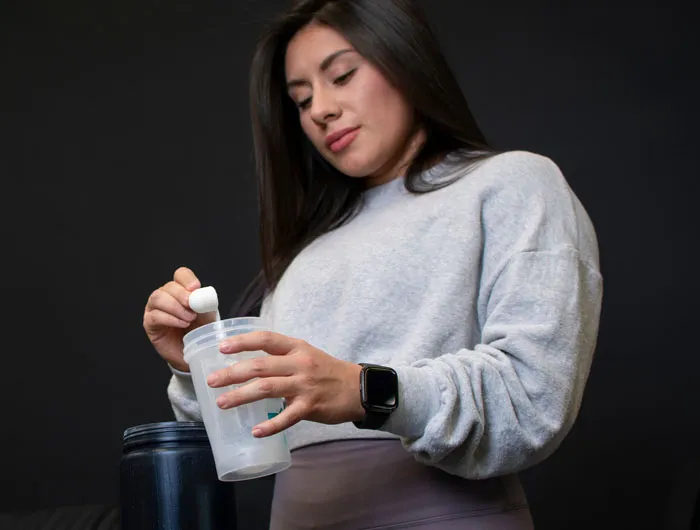
Yes — a 2026 Texas A&M trial found 10 g/day creatine added ~2.4 lbs of lean tissue and improved strength in sedentary middle-aged adults over 12 weeks, with even larger gains when combined with exercise.
Can Creatine Build Muscle Without Exercise? What a New 12-Week Trial Shows for Indian Adults in 2026
Creatine monohydrate is a naturally occurring nitrogenous compound that helps regenerate adenosine triphosphate (ATP) in muscle cells. A landmark 2026 trial from Texas A&M University now shows it can meaningfully increase lean tissue and strength even in adults who perform no structured exercise at all. For Indian adults navigating sarcopenia, desk-bound lifestyles, and protein-poor diets, that finding carries real practical weight.
The study, published in the Journal of the International Society of Sports Nutrition, enrolled 64 healthy adults aged 45 to 65 and ran for 12 weeks. Participants self-selected into either an exercise-plus-diet group or a non-exercise group, and within each group were randomly assigned to 10 g/day of creatine monohydrate or a placebo. The non-exercising creatine group gained approximately 2.4 lbs (roughly 1.1 kg) of lean tissue and improved both leg press and bench press strength — without a single gym session.
How the Four Study Groups Compared After 12 Weeks
Here is a side-by-side summary of what each group experienced across the trial's key outcomes:
| Group | Lean Tissue Change | Strength Gains | Body Fat % Change | Aerobic Capacity |
|---|---|---|---|---|
| Creatine, no exercise | +~2.4 lbs lean tissue | Leg press ↑, bench press ↑ | Modest improvement | No significant change |
| Placebo, no exercise | Minimal change | Minimal change | No significant change | No significant change |
| Creatine + exercise + diet | +~3 lbs lean tissue | Greater leg press ↑, bench press ↑, time-to-exhaustion ↑ | Larger reduction vs. exercise alone | No additional benefit from creatine |
| Placebo + exercise + diet | Little change in lean tissue | Strength improved | Moderate reduction | Improved |
Sources: ScienceDaily / Texas A&M; ScienceAlert; GQ
One pattern stands out: creatine's anabolic signal exists independent of exercise, but exercise amplifies it substantially. Aerobic capacity was the one domain where creatine added nothing beyond what training alone produced — consistent with decades of prior evidence showing creatine primarily supports phosphocreatine-dependent, high-intensity muscular work rather than sustained cardiovascular output.
What Exactly Did the 2026 Texas A&M Trial Find?
The study was led by Dr. Richard Kreider, professor and director of the Exercise and Sport Nutrition Lab at Texas A&M, who has studied creatine for more than 30 years. Among the 26 participants who opted out of the exercise intervention, those taking creatine still increased lean tissue mass as well as bench press and leg press strength — without changing their resistance training habits.
The exercise group performed both resistance and aerobic training three times per week while following a modest calorie deficit. Among those 38 participants, the creatine subgroup added nearly 3 lbs of lean tissue while simultaneously losing fat mass. The placebo subgroup following the same exercise-and-diet protocol showed little change in lean tissue. The researchers describe this as the first study to demonstrate that adding creatine to an exercise-and-diet-induced weight-loss program can reduce body fat percentage more than exercise and diet alone.
The GQ report also noted exploratory findings on cognitive function: those who took creatine — whether or not they exercised — showed enhanced cognitive function and memory scores at the 6-week and 12-week assessments. These cognitive results are preliminary and need replication, but they align with a growing body of work examining creatine's role in brain energy metabolism.
One disclosure worth flagging: the study's senior author, Richard Kreider, chairs the scientific advisory board of Alzchem, the creatine manufacturer that supplied the supplements and funded one set of laboratory tests. The company was not involved in collecting, analyzing, or interpreting the data, but readers should weigh this context when assessing the strength of the findings.
How Does Creatine Actually Build Muscle — With or Without a Workout?
Creatine is synthesized in the liver, kidneys, and pancreas from the amino acids glycine, arginine, and methionine. Once in the bloodstream, it is taken up by skeletal muscle and converted to phosphocreatine (PCr), a rapid reservoir for ATP regeneration during high-intensity muscular contractions.
Around 95% of the body's creatine is stored in skeletal muscle, with smaller amounts in the brain, heart, and other organs. Supplementing with creatine monohydrate saturates these stores beyond what diet and endogenous synthesis alone can achieve. That is why the effects are most pronounced in people with lower baseline creatine levels — including vegetarians, vegans, and older adults whose dietary intake of meat and fish tends to decline.
The muscle-building signal without exercise likely operates through several pathways. Elevated intramuscular phosphocreatine may directly stimulate anabolic signaling cascades (including IGF-1 and satellite cell activation) independent of mechanical loading. Creatine also has osmotic properties: as muscle cells absorb supplemental creatine, they draw in water intracellularly, creating cell swelling that some researchers believe is a hypertrophic stimulus in its own right. A 2024 meta-analysis of 12 RCTs found creatine users gained an average of 1.14 kg (2.51 lbs) more lean body mass than non-users over 4–12 weeks of resistance training, while body fat dropped by 0.7 kg on average.
It is worth being precise about what "lean tissue" means here. Early weight gain on creatine — typically 1 to 3 lbs in the first one to two weeks — is largely intracellular water, not contractile protein. The 2003 Powers et al. study in the Journal of Athletic Training confirmed that the ratio of intracellular to extracellular fluid stays flat during creatine loading, meaning the water goes into muscle cells rather than under the skin. Over a 12-week window, as in the Texas A&M trial, some genuine accretion of contractile tissue becomes plausible, but the exact proportion of water versus protein in that 2.4-lb gain is not fully resolved by the published data.
Is 10 Grams Per Day the Right Dose for Indian Adults?
The Texas A&M trial used 10 g/day — double the 3–5 g maintenance dose that most supplement labels recommend. This distinction matters. A 2025 UNSW trial found that 5 g/day did not add measurable muscle beyond what training alone produced once fluid retention was washed out. The UNSW senior author, Dr. Mandy Hagstrom, suggested that 10 g/day may be required to see hypertrophy beyond training, though this has not yet been tested in a dedicated RCT.
Standard dosing protocols in the literature involve a loading phase of 20 g/day (split into four doses) for 5–7 days, followed by a maintenance dose of 3–5 g/day. A lower daily dose of 3–5 g can achieve similar muscle saturation over approximately 28 days without the loading phase. For middle-aged adults specifically, the Texas A&M data suggest that 10 g/day may be the threshold at which benefits appear even without exercise — a practically important point for anyone who is sedentary due to injury, illness, or time constraints.
For Indian adults, dietary creatine intake is typically lower than in Western populations for two reasons. Vegetarianism is prevalent — roughly 30–40% of the Indian population follows a vegetarian diet, and creatine is found almost exclusively in meat and fish. Even among non-vegetarians, portion sizes of red meat tend to be smaller. Reaching a daily intake of 10 g of creatine from food alone would require eating roughly 5 to 10 pounds of meat or fish each day, making supplementation the only practical route. Indian vegetarians and older adults may therefore be among those who respond most strongly to creatine supplementation, since they start from a lower baseline.
What Does This Mean for Muscle Loss With Age (Sarcopenia)?
Sarcopenia — the progressive, age-related loss of skeletal muscle mass and function — begins as early as the fourth decade of life and accelerates after age 60. In India, prevalence estimates range from 15% to over 40% in adults above 60, depending on the diagnostic criteria used, and it is closely linked to falls, fractures, metabolic disease, and loss of independence.
The Texas A&M findings are directly relevant here. Kreider has previously emphasized creatine's importance throughout the lifespan, including its potential value for older adults facing age-related declines in muscle mass and cognitive function. A 2019 review published in the Journal of Clinical Medicine found that supplementing creatine after age 65 helped slow muscle loss whether or not someone exercised regularly — a finding the 2026 trial now reinforces with a younger middle-aged cohort (45–65) and a more rigorous randomized design.
For Indian adults who cannot exercise due to orthopedic problems, cardiovascular limitations, or disability, the 2026 data offer a meaningful signal: creatine supplementation alone may provide a partial buffer against muscle loss. It is not a replacement for physical activity — the exercise group gained more lean tissue and experienced greater fat loss — but it may be a useful adjunct in clinical settings where exercise is contraindicated or difficult to sustain.
The University of Utah's ongoing CREATINE-52 trial (NCT06112990) is examining a related question in a different population: whether 52 weeks of creatine monohydrate plus resistance training can preserve muscle mass and attenuate cancer progression in men with metastatic prostate cancer receiving androgen deprivation therapy. Results from that Phase 3 trial, expected by late 2028, will add important data on creatine's role in medically induced muscle wasting.
Does Creatine Cause Fat Gain or Water Retention?
This is one of the most common concerns among Indian adults considering creatine, particularly women who worry about looking "bloated" or gaining unwanted weight.
Creatine does not cause fat gain under any circumstances — it contains zero calories. Dr. Eric Rawson at Bloomsburg University confirmed in a systematic review that creatine-associated mass gains are water and lean mass, never fat. The initial 1–3 lb scale increase in the first one to two weeks is intracellular water — fluid drawn into muscle cells by creatine's osmotic effect, not subcutaneous fluid that creates visible puffiness.
Over a 12-week period with resistance training, a 2024 Desai meta-analysis of 12 RCTs showed creatine users gained 1.14 kg more lean body mass than placebo, while body fat dropped by 0.7 kg and body fat percentage dropped 0.9 percentage points. The Texas A&M 2026 trial extends this: the creatine-plus-exercise group experienced a larger decrease in body fat percentage than the exercise-only group, and this was the first study to formally demonstrate that result in a weight-loss context.
For women specifically, scientists note that women often have lower stored creatine levels than men due to differences in muscle mass and dietary patterns, and may therefore see greater relative improvements from supplementation. Most creatine trials have historically enrolled predominantly male participants, making this an underexplored area.
Is Creatine Safe for Long-Term Use?
Safety is a legitimate question for any supplement taken daily over months or years. The evidence base here is unusually solid. In a 2025 analysis, Kreider and colleagues reviewed 685 clinical trials and found no significant difference in reported side-effect rates between people taking creatine and those receiving a placebo. Creatine is among the most heavily studied nutritional supplements in existence, with a research history spanning more than three decades.
Common misconceptions — that creatine damages kidneys, causes hair loss, or acts like a steroid — have been repeatedly refuted in the peer-reviewed literature. Creatine's role in muscle development is solely to provide energy for contraction and respiration; it is not a substitute for steroids. Kidney concerns typically arise from confusion between creatine (the supplement) and creatinine (a metabolic waste product measured in kidney function tests). Supplementing creatine does raise creatinine levels slightly, which can look alarming on a blood panel, but this does not reflect actual kidney damage in healthy individuals.
For people with pre-existing kidney disease, caution and medical supervision are warranted. For healthy middle-aged adults — the population studied in the Texas A&M trial — the safety profile at 10 g/day over 12 weeks appears clean based on the available data.
Should You Take Creatine Without Exercising? A Practical Framework for Indian Adults
The 2026 Texas A&M trial demonstrates that creatine has a measurable anabolic effect even without exercise, but the effect is substantially smaller than what exercise-plus-creatine produces. GQ's reporting on the study quoted longevity physician Dr. Alka Patel, who cautioned that creatine results "shouldn't be an excuse to swap in creatine for exercise" — a point the researchers themselves echo.
ScienceAlert's coverage noted that Jason Mitchell, chief medical officer at Geisinger, remained unconvinced that creatine works meaningfully without exercise, pointing to a 2019 two-year randomized trial of roughly 200 older women that found no improvement in lean mass or muscle strength without resistance training. That earlier trial, however, did not directly compare a training group to a non-training group within the same study — a methodological gap the 2026 Texas A&M design addressed.
Previous trials on creatine without exercise have produced mixed results, and the field is not settled. What the 2026 data add is a well-controlled, randomized comparison within a single study, using a dose (10 g/day) that may be above the threshold required to see effects in sedentary individuals.
A practical framework for Indian adults:
If you can exercise, combine creatine (10 g/day) with resistance training at least three times per week. The Texas A&M data, and the broader meta-analytic literature, show this combination produces the largest gains in lean tissue and the greatest reductions in body fat percentage. Adding a modest calorie deficit to this combination appears safe and effective for those also managing weight.
If you cannot exercise due to injury, illness, or disability, the 2026 data suggest creatine supplementation alone may partially offset muscle loss — particularly if you are over 45, vegetarian, or have low baseline dietary creatine intake. This should be discussed with a physician, especially if you have kidney disease or are on medications that affect creatinine clearance.
If you follow a vegetarian or vegan diet, your baseline creatine stores are likely lower than those of meat-eaters, meaning you may be a "high responder" to supplementation. Given the prevalence of plant-based diets in India and the near-impossibility of reaching therapeutic creatine levels through food alone, this is an area where Indian adults have a particular reason to consider supplementation.
For broader context on managing muscle health through supplementation in India, our coverage of berberine for insulin resistance and Arjuna for heart health explores how evidence-based supplementation fits into Indian health contexts more broadly.
What Are the Remaining Gaps in the Research?
Several important questions remain unanswered. The Texas A&M trial enrolled adults aged 45 to 65 in the United States; whether the same dose-response relationship holds for Indian adults — who differ in body composition, dietary patterns, and baseline creatine stores — is not known. The cognitive benefits observed in the trial were not a primary endpoint, and the sample size is too small to draw firm conclusions from them. The proportion of the lean tissue gain attributable to contractile protein versus intracellular water has also not been fully characterized in this specific trial.
The University of Utah's CREATINE-52 trial (NCT06112990) will provide 52-week data on creatine plus resistance training in a clinical population, helping clarify whether the benefits seen at 12 weeks are durable over a longer horizon. That trial is estimated to complete in late 2028.
The dose question remains open as well. The UNSW data suggest 5 g/day may be insufficient for hypertrophy beyond training; the Texas A&M trial used 10 g/day. Whether there is a dose-response curve between 5 and 10 g/day, and whether 10 g/day is optimal or simply better than 5 g/day, has not been tested in a head-to-head RCT. For now, the 10 g/day figure from the 2026 trial is the best available reference point for middle-aged adults seeking muscle preservation without guaranteed exercise adherence.
The Bottom Line
The 2026 Texas A&M trial is the strongest evidence to date that creatine monohydrate can produce meaningful gains in lean tissue and muscular strength in middle-aged adults who perform no structured exercise. The effect — approximately 2.4 lbs of lean tissue and improved leg and bench press strength over 12 weeks at 10 g/day — is real but modest compared to what exercise-plus-creatine achieves. The combination of creatine, resistance training, and a modest calorie deficit produced the largest improvements across every measured outcome, including a reduction in body fat percentage that exceeded what exercise and diet alone could achieve.
For Indian adults, the relevance is heightened by high rates of vegetarianism (which depresses baseline creatine stores), rising sarcopenia prevalence, and the practical barriers many people face in maintaining consistent exercise programs. Creatine is not a substitute for movement, but the 2026 data make a credible case that it is more than just a gym supplement — it may be a useful tool for maintaining muscle across the lifespan, with or without a workout program to support it.
Sources
- Creatine may help build muscle even without exercise, researchers find | ScienceDaily
- Popular Supplement Increases Strength Even Without Exercise, Study Shows | ScienceAlert
- Creatine Can Make Aging Adults Stronger—Even Without Exercise | GQ
- Scientists reveal creatine's hidden power beyond muscle gains | ScienceDaily
- Creatine Weight Gain: How Much Is Water vs Muscle? | YourHealthier
- CREATINE-52 Clinical Trial — NCT06112990 | ClinicalTrials.gov
- Effects of creatine supplementation with and without exercise and diet intervention | Journal of the International Society of Sports Nutrition
- Texas A&M University — Study Finds Creatine's Benefits Extend Beyond the Gym