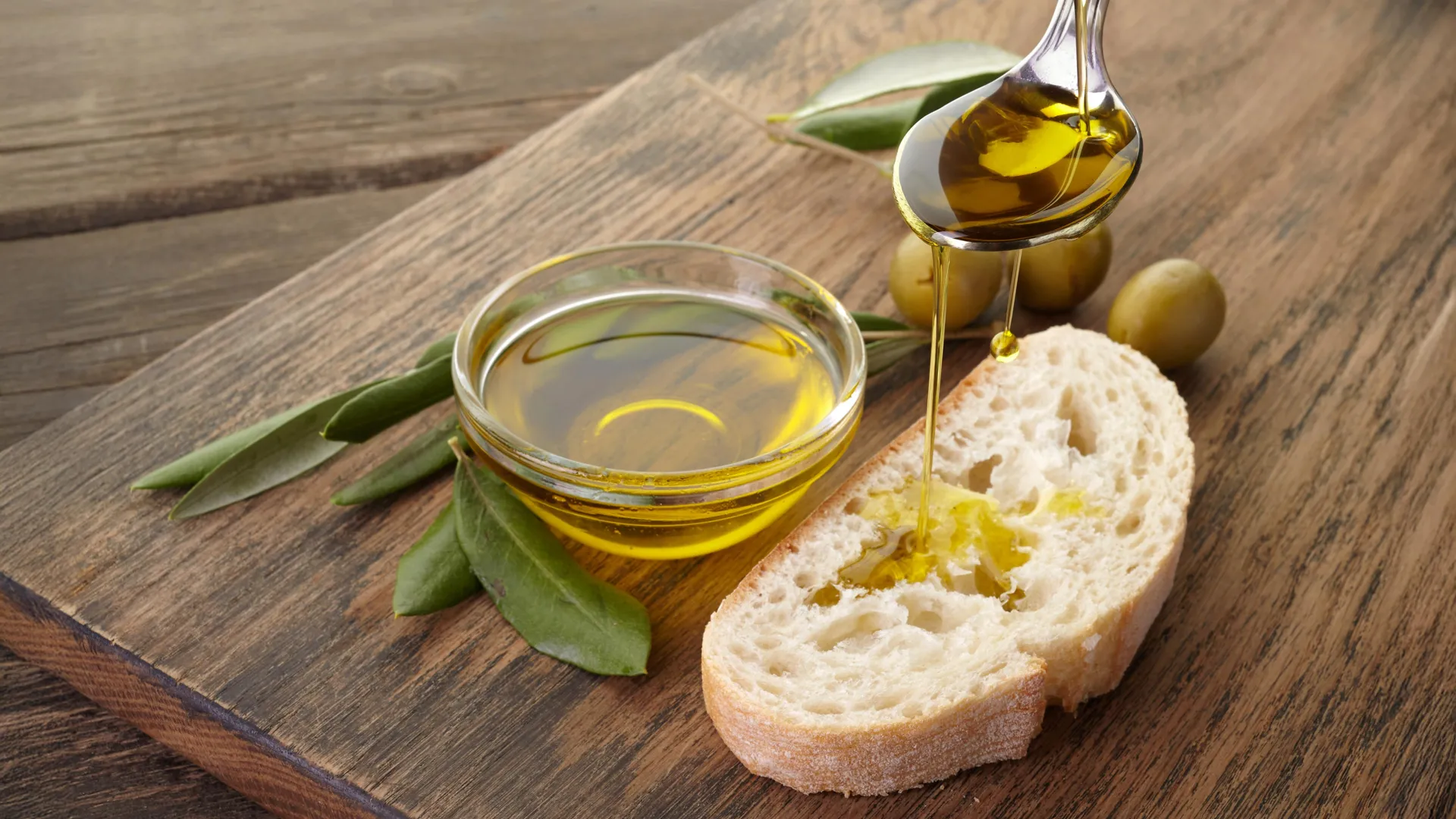
Yes, in mice: olive oil consumed 15 minutes before carbs slowed gastric emptying and activated GLP-1, glucagon, and vagus nerve signals to measurably blunt blood sugar spikes — including in type 2 diabetic models. Human evidence is promising but not yet definitive.
Does Eating Olive Oil Before Carbs Actually Blunt Blood Sugar Spikes? What the New Research Shows
A 2026 study from Kyoto University, published in the journal Diabetes, found that giving mice olive oil 15 minutes before a glucose load produced a measurably smaller blood sugar spike than giving the oil after glucose — or not at all. The mechanism turned out to be more complex than researchers expected, involving at least three overlapping biological systems rather than a single hormone or digestive process.
This finding adds scientific weight to a dietary strategy — eating fat before carbohydrates — that has circulated in clinical nutrition circles for years without a clear mechanistic explanation. Before unpacking what the new research actually shows, it helps to map the existing evidence space.
How Does the Olive Oil–Before–Carbs Strategy Compare to What We Already Knew?
The table below summarizes the key evidence tiers, from the new mouse study through to human clinical data, so you can judge the strength of each claim independently.
| Evidence Source | Study Type | Population | Key Finding | Limitation |
|---|---|---|---|---|
| Kyoto University, 2026 (Diabetes) | Controlled animal experiment | Mice (including T2D models) | Olive oil 15 min before glucose slowed gastric emptying, raised GLP-1 and glucagon early, reduced blood sugar spike; effect persisted in insulin-deficient mice | Mouse model only; human translation unconfirmed |
| Bozzetto et al., 2016 (Diabetes Care) | Randomized crossover trial | 13 Type 1 diabetes patients | EVOO with a high-glycemic-index meal reduced 0–3h postprandial glucose area under the curve vs. low-fat or butter (198 vs. ~407 mmol/L × 180 min) | Small sample; fat consumed with meal, not before |
| Schwingshackl et al., 2017 (npj Primary Care Respiratory Medicine) | Meta-analysis of cohort studies + RCTs | 15,784 T2D cases across 4 cohorts; 29 trials | Highest olive oil intake associated with 16% reduced T2D risk; OO supplementation reduced HbA1c by −0.27% and fasting glucose by −0.44 mmol/L vs. control | Observational cohorts can't establish causation; trials varied in design |
| Dehghani et al., 2021 (Nutrition, Metabolism and Cardiovascular Diseases) | Systematic review + meta-analysis of RCTs | 633 subjects across 13 trials | EVOO had no statistically significant effect on fasting blood glucose, insulin, or HOMA-IR; decreasing trend observed | Short trial durations; high phenolic EVOO specifically studied |
| Atefi et al., 2018 (PMC) | Randomized controlled trial | 77 women with T2D | Olive oil reduced CRP (inflammation marker) significantly vs. sunflower oil; no significant change in fasting blood sugar or insulin | 8-week duration; inflammation, not acute glucose, was primary endpoint |
| Cancelas et al., 2006 (Horm Metab Res) | Animal experiment | Streptozotocin-induced T2D rats | Olive oil diet increased immediate GLP-1 response but did not improve glucose tolerance over 50 days | Chronic dietary exposure differs from acute pre-meal dosing |
The picture that emerges is layered: olive oil consumed alongside or before carbohydrates appears to acutely dampen post-meal glucose rises in both animal models and some human trials, but chronic supplementation studies measuring fasting glucose show weaker or null effects. The Kyoto research is the first to isolate the timing variable — fat before versus after carbohydrates — and to trace the hormonal and neural pathways responsible.
What Exactly Did the Kyoto University Study Do?
The study, led by corresponding author Daisuke Yabe and published in Diabetes (DOI: 10.2337/db26-0531), used a tightly controlled experimental design in mice to isolate the effect of meal order on blood sugar regulation.
After an overnight fast, mice were divided into three groups: one received water followed by glucose, a second received olive oil followed 15 minutes later by glucose, and a third received glucose first with olive oil administered 15 minutes afterward. Researchers then measured blood glucose, insulin, glucagon, GIP (glucose-dependent insulinotropic polypeptide), and GLP-1 (glucagon-like peptide-1) at multiple time points.
Gastric emptying speed was measured using acetaminophen as a proxy — by tracking how quickly the drug appeared in the bloodstream after oral administration, the team could estimate how fast stomach contents were moving into the small intestine. This is a validated pharmacokinetic method used in human gastroenterology research as well.
The experiments were then extended to mice with type 2 diabetes, mice lacking the GLP-1 receptor, and groups where glucagon signaling, GLP-1 signaling, or both were pharmacologically blocked. The researchers also surgically cut the vagus nerves below the diaphragm on both sides to test whether the nervous system was part of the response.
What Were the Actual Results?
The results showed a clear difference depending on the sequence of fat and carbohydrate consumption. When olive oil preceded glucose, the initial blood sugar rise was smaller than when oil was given after glucose. Gastric emptying was also slower in the fat-first group, meaning glucose moved from the stomach into the small intestine more gradually — reducing the speed at which it could enter the bloodstream.
Fat consumed before glucose triggered an earlier and larger release of GLP-1, GIP, and — surprisingly — glucagon. This early hormonal response appeared to be part of the mechanism dampening the glucose spike.
The effect held in mice with type 2 diabetes and severe insulin deficiency. That detail is clinically meaningful: it suggests the mechanism does not depend entirely on functional insulin secretion, which is compromised in advanced type 2 diabetes. Even when the normal insulin response is significantly impaired, the fat-first strategy appeared to engage alternative regulatory pathways.
Why Is Glucagon's Role Surprising?
Glucagon is a pancreatic hormone whose primary known function is to raise blood glucose by stimulating the liver to release stored glycogen — essentially the opposite of what insulin does. Finding that glucagon contributes to a blood-sugar-lowering response after fat ingestion was one of the study's most counterintuitive results.
When the researchers blocked glucagon signaling alone, the blood-sugar-lowering effect of eating olive oil first was not eliminated. Blocking GLP-1 signaling alone also failed to remove the benefit. But when both pathways were blocked simultaneously, the protective effect was significantly reduced.
Glucagon and GLP-1 are acting as partially redundant partners in this context — each can partially compensate when the other is absent, but the full effect requires both. This also suggests that glucagon's role in post-meal physiology is more nuanced than its textbook description implies. In the context of fat-first eating, glucagon appears to contribute to a coordinated response that limits glucose absorption rather than raising blood sugar.
This finding aligns with emerging research on glucagon's role in gut motility and satiety signaling, areas where the hormone's functions are still being characterized.
What Role Does the Vagus Nerve Play?
The vagus nerve is the longest cranial nerve in the body, running from the brainstem through the chest and abdomen and serving as the primary communication highway between the brain and the digestive system. It regulates heart rate, digestion, hormone release, and a range of other autonomic functions.
When the Kyoto team surgically interrupted the vagus nerve pathways below the diaphragm on both sides, the results indicated that vagal communication contributes to the body's response to nutrient order. The gut doesn't just respond to olive oil through local hormone release — it also sends signals up the vagus nerve to the brain, which then modulates the digestive response.
This adds a neural dimension to what had previously been understood as a purely hormonal and mechanical phenomenon. The full picture now involves at least three overlapping systems: slowed gastric emptying (mechanical), early GLP-1 and glucagon release (hormonal), and vagus nerve signaling (neural). These systems appear to work in concert rather than sequentially.
How Does This Compare to What Human Studies Have Found?
The human evidence for fat-before-carbs as a blood sugar management strategy is promising but comes from a different angle than the new mouse study.
The most directly relevant human trial is Bozzetto et al. (2016), a randomized crossover study in 13 patients with type 1 diabetes. Participants consumed high-glycemic-index meals paired with either low fat, butter (saturated fat), or extra-virgin olive oil (monounsaturated fat). The EVOO condition produced a markedly lower postprandial glucose area under the curve in the 0–3 hour window: 198 mmol/L × 180 min versus approximately 416 for low fat and 398 for butter — roughly a 50% reduction in early postprandial glucose exposure. In that study, the fat was consumed as part of the meal, not 15 minutes before it. The Kyoto study's specific finding about pre-meal timing has not yet been replicated in humans.
At the longer-term end of the spectrum, a 2017 meta-analysis by Schwingshackl and colleagues pooled data from four cohort studies (15,784 T2D cases) and 29 intervention trials. The highest olive oil intake category was associated with a 16% reduced risk of developing type 2 diabetes compared to the lowest intake category (RR: 0.84; 95% CI: 0.77–0.92). In people already diagnosed with T2D, olive oil supplementation was associated with a statistically significant reduction in HbA1c of −0.27% and fasting plasma glucose of −0.44 mmol/L compared to control groups.
A 2021 meta-analysis by Dehghani et al. focusing specifically on extra-virgin olive oil in randomized controlled trials found no statistically significant effect on fasting blood glucose (SMD: −0.07; 95% CI: −0.20, 0.07), insulin, or HOMA-IR across 13 trials involving 633 subjects. A decreasing trend was observed, but it did not reach significance. The authors noted that longer trial durations and better-designed RCTs are needed.
The discrepancy between these meta-analyses likely reflects differences in what they measured: Schwingshackl included cohort studies and a broader range of glycemic markers, while Dehghani focused on fasting glucose in EVOO-specific RCTs. Acute post-meal glucose spikes — which the Kyoto study addresses — are a different target than fasting glucose, and the two don't always move together.
Does the Fat Type Matter, or Is Olive Oil Specifically Important?
The Kyoto study tested whether different dietary fats produced similar results to olive oil. The paper does not fully detail these comparisons in the publicly available summary, but the research team did conduct experiments with additional fat types as part of their protocol.
From the broader literature, olive oil's effects on glucose metabolism are attributed to two main components: its high monounsaturated fatty acid (MUFA) content, primarily oleic acid, and its polyphenol fraction, which includes oleocanthal and oleuropein. These polyphenols have anti-inflammatory and insulin-sensitizing properties that saturated fats like butter do not share.
The Bozzetto et al. human trial directly compared EVOO to butter in the same meal context and found that only EVOO significantly reduced postprandial glucose — butter did not. Fat type matters, not just fat quantity.
The Atefi et al. randomized trial in 77 women with type 2 diabetes found that both olive oil and canola oil significantly reduced CRP (a marker of systemic inflammation) compared to sunflower oil, but neither produced significant changes in fasting blood sugar or insulin over 8 weeks. This supports the idea that olive oil's metabolic benefits may be more visible in acute post-meal scenarios than in fasting measurements.
For the pre-meal timing strategy specifically, olive oil's gastric emptying delay — driven by fat content triggering cholecystokinin release in the duodenum — is likely shared by other high-fat foods. But the polyphenol-mediated effects on GLP-1 secretion may be more specific to olive oil and other high-phenolic plant oils.
What Are the Practical Implications for People Managing Blood Sugar?
The Kyoto findings suggest a biologically plausible mechanism for a dietary habit already common in Mediterranean cuisine: drizzling olive oil on bread, dipping before eating, or consuming a small amount of fat before a carbohydrate-heavy meal. If the mouse mechanisms translate to humans, the optimal window appears to be approximately 15 minutes before carbohydrate consumption.
For people interested in blood sugar management, this strategy has several practical advantages over more restrictive approaches. It does not require eliminating carbohydrates, counting macros, or adopting a specialized diet. It works within existing meal structures. And if the vagus nerve and hormonal mechanisms identified in mice operate similarly in humans, the effect may be particularly useful for people with impaired insulin secretion — precisely the population that most needs additional blood sugar management tools.
Several important caveats apply, though. The Kyoto study was conducted entirely in mice, and the authors explicitly state that human studies are still needed. Hormonal responses in rodents do not always translate directly to human physiology, particularly for gut hormones like GLP-1 and GIP, which have different secretion patterns across species.
The existing human evidence — particularly the Bozzetto et al. trial — supports the general principle that EVOO reduces postprandial glucose in high-glycemic-index meal contexts, but that study did not test the specific pre-meal timing protocol. The 15-minute window identified in the mouse study has not been validated in humans.
People already managing diabetes with medication should also note that combining fat-first eating with GLP-1 receptor agonist drugs (like semaglutide or liraglutide) could theoretically produce additive effects on gastric emptying — which may be beneficial or require dose adjustment depending on individual circumstances. This is a conversation for a clinician, not a dietary self-experiment.
For those interested in complementary approaches to blood sugar management, the evidence base for berberine and carb-blocking supplements follows a similar pattern: promising mechanistic data, some human trial support, but not yet at the level of established pharmaceutical interventions.
What Research Still Needs to Happen?
The Kyoto team's findings open several specific questions that future research should address.
The 15-minute pre-meal window needs to be tested in humans with continuous glucose monitoring to determine whether the gastric emptying delay and hormonal response observed in mice occur on a similar timescale in people. Human gastric emptying is influenced by many factors — meal volume, stress, medications, individual variation — that were controlled out of the mouse experiments.
The optimal dose of olive oil also needs to be established. The mouse experiments used a specific volume relative to body weight; the human equivalent is not straightforward to calculate. Too little may not trigger the gastric emptying delay; too much adds significant caloric load, which has its own metabolic consequences.
The durability of the effect needs study as well. The Kyoto experiments measured acute responses after overnight fasting. Whether the fat-first strategy continues to blunt glucose spikes when practiced daily, across varied meal compositions, and in people with different baseline metabolic health is unknown.
Finally, olive oil's polyphenol content needs to be disentangled from its fat content. Refined olive oil (low polyphenols) versus extra-virgin olive oil (high polyphenols) may produce different hormonal responses, and this distinction matters for practical recommendations.
The Bottom Line
Eating olive oil before carbohydrates does appear to blunt blood sugar spikes — at least in mice, and at least acutely. The 2026 Kyoto University study provides the most mechanistically detailed explanation to date: the effect involves slowed gastric emptying, early and coordinated release of GLP-1 and glucagon acting as partially redundant partners, and vagus nerve signaling — a three-system response that persists even when insulin secretion is severely impaired.
The human evidence, while not yet testing the specific pre-meal timing protocol, is directionally consistent. EVOO consumed with high-glycemic-index meals reduced postprandial glucose by roughly 50% in a small human RCT, and meta-analyses associate higher olive oil intake with a 16% lower risk of developing type 2 diabetes. The fasting glucose data from chronic supplementation trials is weaker and less consistent.
The fat-before-carbs strategy is biologically plausible, practically simple, and supported by converging evidence across multiple study types — while remaining unproven in the specific form the Kyoto study tested. Human clinical trials with the 15-minute pre-meal protocol are the logical next step, and they cannot come soon enough for the hundreds of millions of people managing blood sugar daily.
Sources
- Eating olive oil before carbs has a surprising effect on blood sugar | ScienceDaily
- Extra-Virgin Olive Oil Reduces Glycemic Response to a High-Glycemic Index Meal in Patients With Type 1 Diabetes: A Randomized Controlled Trial - PubMed
- Olive oil in the prevention and management of type 2 diabetes mellitus: a systematic review and meta-analysis of cohort studies and intervention trials - PMC
- Effect of extra virgin olive oil consumption on glycemic control: A systematic review and meta-analysis - ScienceDirect
- The effects of canola and olive oils on insulin resistance, inflammation and oxidative stress in women with type 2 diabetes: a randomized and controlled trial - PMC
- Effects of an olive oil-enriched diet on glucagon-like peptide 1 release and intestinal content, plasma insulin concentration, glucose tolerance and pancreatic insulin content in an animal model of type 2 diabetes - PubMed
- Berberine for Insulin Resistance and Blood Sugar in India: An Evidence-Based Protocol (2026) - Nano Health Insights
- Best Carb Blocker Supplements in India for Fat Loss and Post-Meal Glucose Control (2026) - Nano Health Insights