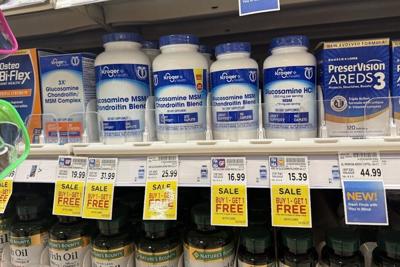
A large UF Health records study found glucosamine use linked to 25% faster MCI-to-dementia progression and 25% higher mortality in Alzheimer's patients, though causation is unproven and clinical trials are needed.
A September 2026 study from the University of Florida found that glucosamine use was associated with a 25% higher likelihood of mild cognitive impairment progressing to dementia over five years — a finding with immediate relevance for the estimated 40 million Americans who take the supplement regularly, many of them older adults already at elevated risk for neurodegeneration.
Glucosamine is a naturally occurring amino sugar produced by the body and concentrated in healthy cartilage. Widely sold over the counter as a joint-health supplement — often derived from shellfish shells or corn — it is one of the most commonly used dietary supplements among adults over 60. The new research, published in Nature Metabolism, does not prove that glucosamine causes Alzheimer's to worsen. But the size of the dataset, the supporting laboratory evidence, and the biological plausibility of the proposed mechanism make the findings hard to dismiss.
What Did the Study Actually Find?
| Outcome measured | Glucosamine users vs. non-users | Study population | Follow-up period |
|---|---|---|---|
| MCI progression to dementia | 25% higher likelihood (P <0.001) | ~41,000 MCI patients, 8% on glucosamine | 5 years |
| Mortality in ADRD patients | 25% higher risk (P =0.0023) | ~24,000 ADRD patients, 8% on glucosamine | 10 years |
| Mortality in MCI patients | No significant difference (P =0.252) | ~41,000 MCI patients | 10 years |
| Social memory in Alzheimer's mice | Significantly worsened after glucosamine | Transgenic mouse models | Lab experiment |
| N-glycan levels in human Alzheimer's brain tissue | Significantly elevated vs. controls | UF Neuromedicine Brain and Tissue Bank specimens | Post-mortem analysis |
The health-records arm of the study drew on deidentified patient data from the UF Health system spanning 2012 to 2024, analyzed using artificial intelligence. Researchers identified 1,896 patients with Alzheimer's disease or related dementias (ADRD) and 2,750 patients with mild cognitive impairment (MCI) who reported glucosamine use — roughly 8% of each diagnostic group. After controlling for age, sex, and demographics, the associations with faster progression and higher mortality emerged clearly in the ADRD group and the MCI-to-dementia transition, but not in the MCI mortality analysis.
That asymmetry matters. Glucosamine's failure to link with higher mortality in MCI patients — only in those with established dementia — suggests the harm may be specific to a brain already in neurodegeneration, rather than a general risk for anyone who takes the supplement.
What Is Mild Cognitive Impairment and Why Does the Transition to Dementia Matter?
Mild cognitive impairment involves measurable problems with memory or thinking that exceed what is expected with normal aging but do not substantially interfere with everyday life. It is widely regarded as a transitional state — not all people with MCI develop dementia, but those who do typically pass through this stage first. Under normal circumstances, the annual conversion rate from MCI to dementia is roughly 10–15%, though researchers in this study noted that the baseline five-year progression risk in their cohort was approximately 5%.
A 25% relative increase in that risk is clinically meaningful. Even if the absolute numbers remain modest, the sheer scale of glucosamine use — and the overlap between the supplement's typical users (older adults with joint pain) and the population most at risk for Alzheimer's — means the potential public health implications are substantial.
How Could a Joint Supplement Affect the Brain?
The proposed mechanism centers on a biochemical process called glycosylation: the enzymatic attachment of sugar molecules to proteins. This process is normal and essential — proteins need their sugar tags to fold correctly, travel to the right cellular locations, and perform their jobs. The concern raised by this research is that the process appears to become excessively active in the Alzheimer's brain.
Glucosamine can cross the blood-brain barrier, the protective boundary that tightly controls which substances move from the bloodstream into brain tissue. Once inside, it feeds into pathways that construct complex sugar structures and attach them to proteins — a specific form called N-linked glycosylation, or N-glycosylation.
Senior author Ramon Sun, Ph.D., director of the Center for Advanced Spatial Biomolecule Research at UF's McKnight Brain Institute, noted that N-glycan accumulation in post-mortem Alzheimer's brain tissue scales with Braak stage — a measure of how far the disease has progressed anatomically — and that isotope tracing shows the brain is actively producing more N-glycans, not simply failing to clear them. That distinction is important: it points to an overactive production pathway, not just a cleanup failure.
In Alzheimer's mouse models, glucosamine significantly increased the attachment of sugar residues to proteins. The glucosamine-treated mice also developed worse deficits in social memory — the ability to recognize familiar individuals — compared with untreated animals. When researchers chemically suppressed the sugar-attachment process, memory performance improved. That experiment is significant because it suggests excessive glycosylation is not merely a bystander phenomenon but may be actively contributing to cognitive impairment.
Study co-author Matt Gentry, Ph.D., chair of UF's Department of Biochemistry and Molecular Biology, described the finding this way: "Proteins are the cell's molecular machines, and many of them need sugar tags added in just the right way to fold correctly, travel to the right place and do their jobs. What we found in Alzheimer's is that this sugar-tagging system appears to be overactive. The Alzheimer's brain is adding too many of these sugar structures, and this seems to contribute to the disease rather than protect against it."
What Did the Human Brain Tissue Analysis Show?
Working with Stefan Prokop, M.D., the UF team examined brain specimens from people with Alzheimer's disease provided by the UF Neuromedicine Brain and Tissue Bank. Those specimens showed significantly more sugar attachment than tissue from normal controls — consistent with what was observed in the mouse experiments.
The convergence of three independent lines of evidence — the health-records analysis, the mouse experiments, and the human brain tissue findings — is what gives the study its weight. Each line has its own limitations, but the fact that they point in the same direction strengthens the overall signal.
Sun's laboratory used a spatial metabolomics technology it developed in-house to map thousands of molecules in brain tissue at high resolution. This technology allows researchers to examine molecules created when the body breaks down food or drugs and to uncover complex pathways that would otherwise stay hidden — a capability that made the detailed mechanistic analysis possible.
Does This Contradict Earlier Research Suggesting Glucosamine Is Protective?
This is where the picture becomes genuinely complicated, and where intellectual honesty requires acknowledging the tension in the existing literature.
A 2023 study published in BMC Medicine by Zheng and colleagues, using UK Biobank data and Mendelian randomization methodology, found that regular glucosamine use was associated with a lower risk of incident dementia in cognitively healthy adults. Mendelian randomization uses genetic variants as proxies for exposures to reduce confounding — it is a stronger causal inference tool than simple observational analysis, though it carries its own assumptions and limitations.
Sun's team is aware of this prior work and does not dismiss it. Their own healthy-mouse data are consistent with it: glucosamine did not appear to harm cognitively normal animals. The reconciliation they propose is that glucosamine's effects depend heavily on the biological environment in which it is acting. A healthy brain and a brain affected by Alzheimer's may respond very differently to the same molecule — and the Alzheimer's brain, with its already-dysregulated glycosylation machinery, may be uniquely vulnerable to additional glucosamine input.
Sun summarized the distinction directly: "The harm appears specific to a brain already in neurodegeneration. Earlier Mendelian randomization work linked glucosamine to lower dementia risk in cognitively healthy adults. Our healthy-mouse data are consistent with that. The supplement looks safe or possibly protective before disease onset, and harmful after."
That framing — protective in healthy brains, harmful in diseased ones — is biologically plausible, but it has not yet been tested in a controlled human trial. The current evidence is not sufficient to draw firm conclusions in either direction.
What Are the Study's Limitations?
The UF study is a retrospective observational analysis, which means it can identify associations but cannot establish causation. People who take glucosamine may differ from those who do not in ways that influence dementia outcomes — more severe arthritis, different inflammatory profiles, different medication regimens, or different overall health behaviors. The researchers controlled for age, sex, and demographics, but residual confounding is always possible in this type of study.
Neurologist Jason Hinman, MD, PhD, director of UCLA's Easton Center for Alzheimer's Research and Care, who was not involved in the research, noted that the study also did not distinguish among different forms of glucosamine supplementation — glucosamine sulfate, glucosamine hydrochloride, and N-acetyl glucosamine are all sold commercially and may have different pharmacological profiles.
The health-records data also relied on patient-reported supplement use, which can be incomplete or inaccurate. Dose and duration of use were not systematically captured in a way that would allow dose-response analysis.
Gentry acknowledged these limitations directly: "The electronic health record data are very provocative. While it's an association and not proof of causality, it does raise an important clinical question that now deserves much more attention."
What Are Researchers Planning Next?
Sun's team is pursuing two parallel tracks. The first involves identifying N-glycan pathway inhibitors that can penetrate the central nervous system — several such inhibitors exist in cancer research, but none has been developed for the brain or tested in Alzheimer's disease. The second involves designing a clinical trial to test whether discontinuing glucosamine in patients already diagnosed with MCI or ADRD affects disease trajectory.
A standard placebo-controlled randomized trial would not be straightforward to design given the existing harm signal, Sun noted. The cleanest design would involve identifying patients already taking glucosamine and randomizing them to continue or discontinue, then tracking cognitive outcomes.
Yasuhiko Kizuka, Ph.D., of Gifu University in Japan, wrote in an accompanying commentary in Nature Metabolism that "the results of the epidemiological analysis of individuals who use glucosamine, together with the results of glucosamine supplementation in the Alzheimer's disease mouse models, warrant a future clinical trial to determine whether glucosamine uptake in individuals with mild cognitive impairment and Alzheimer's disease worsens clinical symptoms."
The broader implication of the metabolic pathway finding may ultimately be more significant than the glucosamine question itself. Sun's team argues that altered metabolism — specifically, the hyperactivation of the N-glycosylation pathway — is a significant contributor to Alzheimer's progression, and that addressing this metabolic defect could complement existing approaches focused on amyloid plaques and tau tangles. If that hypothesis holds up, it could open a new class of therapeutic targets for a disease that has resisted treatment for decades.
Should People With Cognitive Impairment Stop Taking Glucosamine?
The current evidence does not support a blanket recommendation to stop. What it does support is a conversation between patients and their clinicians — particularly for older adults already experiencing memory or thinking problems who are taking glucosamine primarily for joint discomfort.
Sun's own framing is pragmatic: the evidence that glucosamine actually improves joint pain is itself inconclusive — the American College of Rheumatology does not recommend it for osteoarthritis. If a patient is not experiencing clear benefit, the risk-benefit calculation shifts. "Ask yourself what benefits you're gaining and if it's changing your quality of life," Sun said. "I would say if there's no benefit, what's the point of spending money on it?"
Hinman's view is similar: people taking glucosamine as a general wellness supplement without a specific medical reason may want to reconsider, but there is not yet enough evidence to recommend that people with established joint disease stop using it to manage pain.
This is a preliminary but serious signal. The study was large, the biological mechanism is coherent, and the finding has been published in a high-impact peer-reviewed journal. It deserves clinical attention and a properly designed trial. Until that trial is completed, the honest answer to whether glucosamine speeds up Alzheimer's progression is: possibly, in people who already have neurodegeneration, but we do not yet know for certain.
For anyone concerned about joint health and brain health simultaneously, other approaches to managing joint discomfort — including physical therapy, weight management, and anti-inflammatory dietary strategies — carry no known cognitive risk. Our article on natural supplements for knee arthritis pain explores some of these alternatives in more detail.
Sources
- Glucosamine, a popular joint supplement, linked to faster Alzheimer's progression | ScienceDaily
- Alzheimer's May Be Worse for People Taking Popular Supplement | MedPage Today
- Study links joint pain supplement to accelerating dementia | EurekAlert!
- Common joint supplement may accelerate Alzheimer's disease progression | News-Medical.net
- A Popular Joint Pain Supplement May Actually Speed Up Dementia Progression | Health.com
- Association of regular glucosamine use with incident dementia: evidence from a longitudinal cohort and Mendelian randomization study | PMC
- Hyperglycosylation is a metabolic driver of Alzheimer's disease | Nature Metabolism
- UF Health: Study links joint pain supplement to accelerating dementia