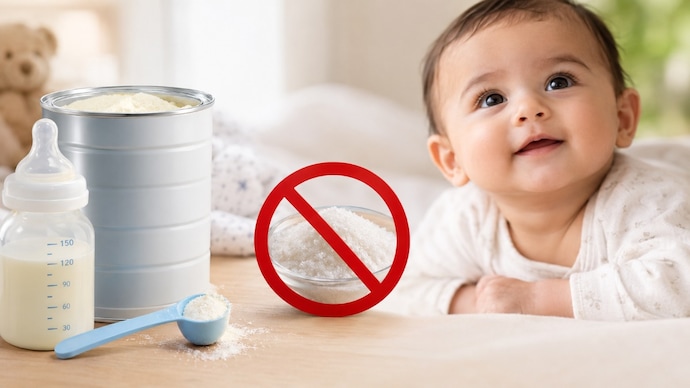
FSSAI's October 2026 draft amendment proposes banning added sucrose and fructose in infant foods for babies up to six months, replacing a current 20%-of-total-carbohydrates limit, with a 60-day public consultation window.
At a Glance: Current Rules vs. Proposed Rules vs. WHO Guidance
| Parameter | Current FSSAI Rules (2020) | Proposed FSSAI Amendment (2026) | WHO Recommendation |
|---|---|---|---|
| Preferred carbohydrate source | Lactose and glucose polymers | Lactose and glucose polymers (unchanged) | Breast milk (exclusive breastfeeding) |
| Sucrose/fructose in 0–6 month products | Permitted, subject to limits (combined max ~20% of total carbohydrates) | Prohibited — zero addition allowed | Not recommended; exclusive breastfeeding advised |
| Sucrose/fructose in 6–24 month products | Permitted with prescribed limits | Not addressed in this draft (limits remain) | Minimise; complement with nutritious foods |
| Consultation period | N/A | 60 days from Gazette publication | N/A |
| Regulatory basis | FSS (Foods for Infant Nutrition) Regulations, 2020 | FSS (Foods for Infant Nutrition) Amendment Regulations, 2026 | Global nutrition guidelines |
The Food Safety and Standards Authority of India (FSSAI) has proposed a complete prohibition on the addition of sucrose and fructose in food products intended for infants up to six months of age. The draft Food Safety and Standards (Foods for Infant Nutrition) Amendment Regulations, 2026 was published in the Gazette of India on October 16, 2026. The move marks a significant tightening of India's infant nutrition regulatory framework, with immediate implications for parents, caregivers, and manufacturers of infant formula and complementary food products.
The proposed amendment inserts a specific restriction on the addition of sucrose and fructose in products intended for infants in the first six months of life — a period that FSSAI and the World Health Organization (WHO) both describe as critical for healthy growth, development, and the formation of lifelong dietary preferences.
What exactly is FSSAI proposing, and why now?
FSSAI is the apex statutory body under the Ministry of Health and Family Welfare responsible for regulating and supervising food safety across India. Its mandate includes setting standards for the composition, quality, and safety of food products, including those formulated for vulnerable groups such as infants and young children.
The draft amendment, published in the Gazette of India on October 16, 2026, proposes to insert a specific provision stating: "sucrose and fructose shall not be added in the products intended for infants up to the age of 6 months."
This departs from the existing Food Safety and Standards (Foods for Infant Nutrition) Regulations, 2020, under which lactose and glucose polymers are the preferred carbohydrate sources, but sucrose and/or fructose may be added when required as a carbohydrate source, subject to prescribed limits. Under the current framework, the combined amount of sucrose and fructose cannot exceed 20% of total carbohydrates in infant nutrition products.
The timing reflects a broader global and domestic push toward preventive nutrition. India has seen rising rates of childhood obesity and diet-related non-communicable diseases, and regulators have been under pressure to close loopholes that allow added sugars in products marketed for the youngest and most nutritionally vulnerable consumers.
Why are sucrose and fructose specifically targeted for infants under six months?
Sucrose is a disaccharide composed of glucose and fructose — commonly known as table sugar and the most widely used added sweetener in processed foods globally. Fructose is a monosaccharide naturally found in fruits and honey but also added to processed foods as a sweetener or carbohydrate source, often in the form of high-fructose corn syrup or crystalline fructose.
Both sugars are metabolically distinct from lactose, the carbohydrate naturally present in breast milk and the primary energy source for newborns. Lactose is digested slowly, supports the growth of beneficial gut bacteria, and does not trigger the same insulin response as sucrose or fructose. Introducing sucrose and fructose to an infant's diet during the first six months can cause several problems.
Early exposure to added sugars is a public health concern because of its potential implications for the development of dietary preferences and long-term dietary habits, as FSSAI's official release explicitly states. Infants repeatedly exposed to sweet tastes develop a stronger preference for sweetness that can persist into childhood and adulthood. Unhealthy dietary patterns — including high added-sugar intake — are also among the risk factors associated with childhood obesity and related metabolic conditions, per FSSAI's own rationale for the amendment.
Products that use sucrose or fructose as a carbohydrate source may provide energy without the micronutrients, immune factors, and bioactive compounds present in breast milk, displacing breastfeeding or creating suboptimal nutritional profiles. There is also a metabolic dimension: an infant's liver and metabolic pathways are not fully developed in the first six months. Fructose is metabolised almost exclusively in the liver, and high intake has been linked to hepatic fat accumulation and insulin resistance in older populations, though data specific to neonates remains an active area of research.
The proposed restriction is explicitly framed as complementing WHO's recommendation for exclusive breastfeeding during the first six months of life, followed by the introduction of nutritionally adequate complementary foods alongside continued breastfeeding. By removing added sugars from the infant formula and nutrition product category for this age group, FSSAI is signalling that any product intended for a 0–6 month infant should mirror — not undermine — the nutritional philosophy of breast milk.
Which products are affected by this proposed ban?
The draft amendment applies specifically to "products intended for infants up to the age of 6 months." In practice, this covers three categories.
Infant formula (stage 1) — the primary category of products formulated for newborns and infants up to six months who are not exclusively breastfed or require supplemental feeding — must currently comply with the FSS (Foods for Infant Nutrition) Regulations, 2020. Specialised infant nutrition products designed for infants with specific medical or nutritional needs, such as premature infants or those with metabolic disorders, also fall within scope if they target the 0–6 month age bracket. Any other food product labelled or marketed for infants up to six months is covered, regardless of format (powder, liquid, ready-to-feed).
Products intended for infants aged 6–12 months (stage 2 follow-on formula) and complementary foods for children aged 6–24 months are not directly addressed by this specific draft amendment. At least one medical expert quoted in the Times of India coverage called for FSSAI to consider extending the ban to products intended for children above six months, given concerns over obesity. That remains a policy question for future regulatory cycles.
What does this mean for parents buying infant formula today?
For parents currently purchasing stage 1 infant formula in India, the proposed amendment changes nothing immediately. The draft is in a public consultation phase and has not yet been finalised or notified as law. Products currently on shelves remain legally compliant under the 2020 regulations.
Parents and caregivers who want to make informed choices right now can take several practical steps.
Read the ingredient list carefully. Under current rules, sucrose and fructose may appear in stage 1 formula. Look for these terms — and their synonyms such as "cane sugar," "corn syrup solids," or "crystalline fructose" — in the ingredient declaration.
Prioritise lactose-dominant formulas. Products that list lactose as the primary or sole carbohydrate source are already aligned with what the proposed amendment would mandate.
Treat formula as a supplement to breastfeeding where possible. Both FSSAI and WHO emphasise that exclusive breastfeeding for the first six months remains the gold standard. Formula, regardless of its carbohydrate composition, is a medical and nutritional supplement, not a nutritional equivalent to breast milk.
Monitor regulatory updates. The 60-day consultation window means stakeholder feedback will be collected through approximately mid-December 2026. Finalisation of the amendment — and any transition timelines for manufacturers — will follow after FSSAI reviews submissions.
Parents who have concerns about their infant's current formula should consult a paediatrician or registered dietitian rather than switching products abruptly based on this draft proposal alone.
How does this fit into India's broader infant food regulatory space?
This proposed amendment is part of a pattern of tightening regulatory oversight of infant and child nutrition products in India that has accelerated over the past two years.
Maharashtra's Food and Drug Administration (FDA) recently moved to ban formula promotions and influencer advertising — a state-level action that mirrors the spirit of the national Infant Milk Substitutes, Feeding Bottles and Infant Foods (Regulation of Production, Supply and Distribution) Act. FSSAI has also issued notices to major food companies including Nestlé India and Hindustan Unilever over misleading food product claims, signalling a broader enforcement posture.
The October 2026 draft amendment is therefore best understood as one component of a multi-pronged regulatory strategy that includes stricter compositional standards (this draft amendment), advertising and promotion restrictions (Maharashtra FDA action, IMS Act enforcement), labelling and claims enforcement (FSSAI notices to manufacturers), and pesticide residue limits in other food categories. The same Gazette notification also proposed maximum residue limits of 20 parts per million for acetamiprid and 50 ppm for imidacloprid in tea, illustrating FSSAI's simultaneous attention to multiple food safety fronts.
The infant nutrition amendment specifically reflects FSSAI's stated focus on science-based food standards, responsible product formulation, and preventive nutrition — language that signals the authority intends to align India's infant food standards more closely with international benchmarks set by bodies such as the Codex Alimentarius Commission.
What happens next in the regulatory process?
The draft amendment follows a defined statutory process under the Food Safety and Standards Act, 2006.
Step 1 — Gazette publication (completed): The draft was published in the Gazette of India on October 16, 2026, formally initiating the public consultation process.
Step 2 — Public consultation (ongoing, 60 days): Stakeholders have been invited to submit objections and suggestions within 60 days from the date on which copies of the official gazette are made available to the public. Submissions are expected to be accepted through approximately mid-December 2026. Stakeholders include manufacturers, paediatricians, public health researchers, consumer advocacy groups, and members of the public.
Step 3 — Review of representations: FSSAI will consider all representations received within the stipulated period before finalising the amendment. This review process does not have a fixed statutory deadline, but typically takes several months.
Step 4 — Finalisation and notification: The proposed restriction will become part of the regulatory framework only after the amendment is finalised and re-notified in the Gazette. Manufacturers will likely be given a transition period to reformulate products and update labelling.
Step 5 — Enforcement: Once notified, FSSAI's enforcement machinery — including state food safety officers and authorised laboratories — will be responsible for verifying compliance at the manufacturing and retail levels. One medical expert quoted in coverage of the amendment emphasised that the restriction must be enforced at the licensing stage, meaning FSSAI should require reformulated products to demonstrate compliance before granting or renewing manufacturing licences.
How should manufacturers and the nutrition industry respond?
For infant formula manufacturers and nutrition product companies operating in India, the draft amendment is a clear signal to begin reformulation planning now — even before the amendment is finalised.
Carbohydrate source substitution will be the central challenge. Manufacturers currently using sucrose or fructose as carbohydrate sources in stage 1 products will need to reformulate using lactose, glucose polymers, or other permitted carbohydrates. Lactose sourced from bovine milk is the most common substitute and already dominates most premium infant formulas. Maltodextrin (a glucose polymer) is another widely used option.
Taste profile adjustment presents a practical complication: sucrose and fructose contribute sweetness that lactose does not replicate. Reformulated products may taste less sweet to adult testers, though infants' taste preferences are still developing — which is precisely the point the regulation is designed to address.
Labelling updates will also be required once the amendment is finalised. Product labels will need to reflect the reformulated carbohydrate composition, including updated nutritional information panels, ingredient lists, and any carbohydrate-related claims.
The 60-day consultation window is an opportunity for manufacturers to submit technical and scientific representations to FSSAI. Industry associations such as the Indian Dietetic Association, the Infant and Young Child Nutrition (IYCN) working groups, and the Federation of Indian Chambers of Commerce and Industry (FICCI) food processing committees are likely to coordinate industry responses.
Manufacturers who also sell products in markets governed by Codex Alimentarius standards, European Food Safety Authority (EFSA) guidelines, or US FDA regulations should assess whether their global formulations are already compliant with the proposed Indian standard. Many premium international infant formula brands have already moved away from added sucrose in stage 1 products, meaning the amendment may require less reformulation than it appears at first glance.
What does the science say about added sugars in early infancy?
The scientific rationale behind FSSAI's proposal draws on a growing body of nutritional epidemiology and developmental biology research. While specific data on sucrose and fructose in infant formula is still accumulating, several well-established findings underpin the regulatory logic.
Research in developmental nutrition has consistently shown that flavour preferences established in the first months of life — including through amniotic fluid, breast milk, and early formula exposure — have lasting effects on food acceptance and dietary patterns in childhood. Infants exposed to sweeter formulas show stronger preferences for sweet tastes in later food trials.
Lactose is also a prebiotic substrate for Bifidobacterium species, which dominate the healthy infant gut microbiome. Sucrose and fructose do not provide the same prebiotic benefit and may alter the microbial composition of the infant gut in ways that are not yet fully characterised.
The concept of metabolic programming — the process by which early nutritional exposures alter physiological set points and increase or decrease risk for metabolic disease later in life — is central to the public health rationale for restricting added sugars in infancy. High fructose intake in particular has been associated with hepatic lipogenesis and insulin resistance in animal models and adult human studies, though direct evidence in human infants is limited.
WHO's global guidance on infant and young child feeding explicitly recommends exclusive breastfeeding for the first six months and cautions against the introduction of foods or drinks other than breast milk during this period. Codex Alimentarius standards for infant formula (Codex Stan 72-1981, as revised) do not mandate the inclusion of sucrose or fructose and generally favour lactose as the primary carbohydrate source.
The data is not uniformly conclusive — particularly regarding the precise dose-response relationship between sucrose or fructose in infant formula and long-term health outcomes in human infants. The precautionary principle, combined with the availability of nutritionally adequate alternatives (lactose, glucose polymers), nonetheless provides a reasonable scientific basis for the proposed restriction.
What should parents and caregivers do right now?
The most important immediate action for parents is to avoid making abrupt changes to their infant's feeding regimen based on this draft proposal. The amendment has not been finalised, and current products remain legally compliant and safe under existing regulations.
For parents who want to be proactive, a few evidence-aligned steps are worth considering.
Prioritise breastfeeding where possible. Exclusive breastfeeding for the first six months remains the most nutritionally complete option and eliminates concerns about formula composition entirely.
If using formula, check the carbohydrate ingredient list. Products listing lactose as the sole or primary carbohydrate are already aligned with the direction of the proposed amendment.
Consult a paediatrician before switching formulas. Infant formula changes — even between products with similar nutritional profiles — can cause digestive adjustment periods. Any switch should be guided by a healthcare professional.
Stay informed about the consultation outcome. FSSAI's finalised amendment, once published, will include any transition timelines. Parents do not need to act before that point.
For parents interested in the broader space of infant and child nutrition, understanding how regulatory frameworks shape product formulation is increasingly relevant — particularly as India's food safety architecture keeps changing. The same science-based approach that informs infant nutrition regulation also underpins guidance on omega-3 DHA supplementation for vegetarians and other nutritional decisions across the lifecycle.
Is this ban final, and when will it take effect?
No — the ban is not final as of October 2026. The proposed restriction will become part of India's regulatory framework only after the amendment is finalised and notified in the Gazette of India following the completion of the public consultation process. FSSAI will consider all representations received within the 60-day consultation period before finalising the amendment.
Given that the consultation window closes around mid-December 2026, and accounting for FSSAI's internal review process, a realistic timeline for finalisation would be sometime in 2027 — though this depends on the volume and nature of stakeholder representations received.
The Gazette notification containing the full draft text is available on the eGazette portal for stakeholders who wish to review the precise regulatory language before submitting comments.
In the interim, manufacturers, retailers, and healthcare providers should treat this as a strong regulatory signal and begin preparing for compliance, even if the exact implementation date remains to be determined. For parents, it is a timely reminder that the nutritional composition of infant products is an active area of regulatory scrutiny — and that reading labels carefully remains one of the most practical tools available to caregivers navigating the infant nutrition market.
Sources
- FSSAI proposes ban on added sucrose, fructose in foods for infants up to six months - The Hindu
- FSSAI Moves to Strengthen Infant Nutrition Standards by Restricting Addition of Sucrose and Fructose - Press Information Bureau
- FSSAI draft amendment proposes ban on sucrose and fructose in food products for babies up to six months - Akashvani News
- FSSAI infant nutrition rules: Sucrose, fructose ban proposed for babies under six months - India Today
- FSSAI may curb sugar in baby food, set pesticide caps for tea - Times of India
- Maharashtra FDA tightens infant food rules, bans formula promotions and influencer advertising - The Hindu
- Draft Gazette Notification - FSS (Foods for Infant Nutrition) Amendment Regulations 2026
- FSSAI Official Website