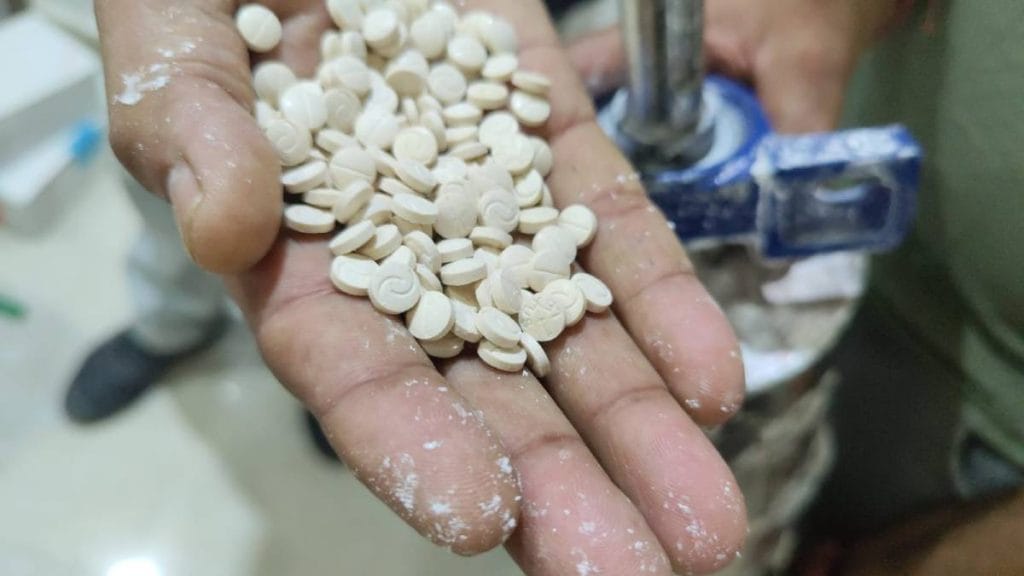
India expanded Schedule H2 QR code traceability from the top 300 pharma brands to all vaccines, antimicrobials, anti-cancer, and NDPS drugs, with phased compliance deadlines of July 2027 and July 2028.
India's Union Health Ministry has formally amended the Drugs Rules, 1945 to extend QR code-based track-and-trace requirements (previously limited to the top 300 pharmaceutical brands) to all vaccines, antimicrobials, anti-cancer medicines, and narcotic and psychotropic drugs covered under the NDPS Act, 1985. The official PIB release dated June 25, 2026 describes this as "a major step towards strengthening the quality, safety and integrity of India's pharmaceutical supply chain." For consumers of supplements and nutraceuticals, the ripple effects are significant even though dietary supplements are not directly named in the amendment, because the regulatory momentum, the infrastructure being built, and the precedent being set will reshape how the entire Indian health-product market is authenticated and policed.
What This Changes for Supplements at a Glance
The table below compares the old Schedule H2 framework, the newly notified rules, and the parallel global traceability space relevant to Indian supplement buyers.
| Dimension | Pre-June 2026 (Schedule H2) | Post-June 2026 Amendment | Global Comparator (US FDA FSMA Food Traceability Rule) |
|---|---|---|---|
| Scope of mandatory QR/barcode | Top 300 pharmaceutical brands | All vaccines, antimicrobials, anti-cancer drugs, NDPS narcotics/psychotropics | Foods on the FDA Food Traceability List (FTL), including many supplement ingredients |
| Regulator | CDSCO / MoHFW | CDSCO / MoHFW (expanded) | US FDA (Center for Food Safety & Applied Nutrition) |
| Key data elements encoded | Not publicly specified per element | 9 elements: unique product ID, generic name, brand name, manufacturer name & address, batch number, manufacture date, expiry date, manufacturing licence number, excipient details | Key Data Elements (KDEs) tied to Critical Tracking Events (CTEs): lot-level tracking |
| Authentication method | Barcode / QR on primary or secondary packaging | QR code readable via software apps for real-time supply-chain verification | Electronic records; 24-hour FDA data submission capability required |
| Compliance deadline | Already in force for top-300 brands | July 1, 2027 (vaccines, anti-cancer, NDPS); July 1, 2028 (antimicrobials) | FDA held a public meeting on June 15, 2026 on lot-level tracking flexibilities |
| Supplement/nutraceutical coverage | Not covered under Schedule H2 | Still not directly covered; governed by FSSAI HSNF Regulations 2016 | Dietary supplement ingredients on FTL subject to traceability records |
| Counterfeit deterrence mechanism | Limited to top-300 scan | Broad digital authentication across entire vaccine/AMR/oncology supply chain | Rapid removal of contaminated food within 24 hours of FDA request |
What Exactly Is Schedule H2, and Why Does It Matter?
Schedule H2 is the schedule under the Drugs Rules, 1945 that mandates affixation of a barcode or Quick Response (QR) code on the packaging of specified drug products to facilitate their authentication and traceability across the supply chain. Before June 2026, Schedule H2 applied only to the top 300 pharmaceutical brands by sales volume, a meaningful but narrow slice of India's vast medicines market.
The June 25, 2026 amendment transforms Schedule H2 from a brand-popularity filter into a category-based mandate. Any manufacturer of a vaccine, antimicrobial, anti-cancer drug, or NDPS-covered narcotic or psychotropic substance must now embed a machine-readable QR code on the primary packaging label or, where space is inadequate, on the secondary packaging label. The QR code must be readable through software applications and must store nine specific data elements: the unique product identification code, the proper and generic name of the drug, the brand name, the name and address of the manufacturer, the batch number, the date of manufacture, the date of expiry, the manufacturing licence number, and details of excipients.
This extends beyond a labelling exercise. The QR code creates a digital thread that can be pulled at any point in the supply chain: by a pharmacist, a hospital procurement officer, a customs inspector, or eventually a consumer with a smartphone. Counterfeit medicines, which by definition lack authentic batch numbers and valid manufacturing licence numbers, cannot pass this verification layer without detection.
Why Were These Four Drug Categories Chosen?
The selection of vaccines, antimicrobials, anti-cancer drugs, and NDPS substances reflects distinct public-health imperatives.
Vaccines are biologicals whose cold-chain integrity is notoriously difficult to verify visually. A vial of counterfeit vaccine looks identical to an authentic one. QR-based authentication allows a health worker at a primary health centre in rural Rajasthan to scan and confirm that the vial in hand matches a batch that left a licensed manufacturer's facility, not a grey-market fill-and-finish operation.
Antimicrobials carry an additional burden: antimicrobial resistance (AMR). Substandard or counterfeit antibiotics (those with insufficient active ingredient) are a documented driver of resistance, because they expose pathogens to sub-therapeutic drug concentrations without eliminating them. The PIB release explicitly states the amendment "will also contribute to the national fight against Anti-Microbial Resistance (AMR) by enabling better identification and monitoring of counterfeit and substandard antimicrobial products." India carries one of the world's highest AMR burdens, making this rationale particularly urgent.
Anti-cancer drugs rank among the most expensive medicines on the Indian market, creating strong financial incentives for counterfeiting. A patient receiving a counterfeit chemotherapy agent faces a double harm: the toxicity of whatever adulterant is present, and the absence of therapeutic effect against their cancer.
NDPS substances, narcotics and psychotropics, are subject to diversion and abuse. QR-based traceability supports the government's "Nasha Mukt Bharat" (Drug-Free India) initiative by making it harder to divert legitimately manufactured controlled substances into illicit channels.
How Does This Affect Supplement Manufacturers and Buyers in India?
Directly, it does not: supplements fall under FSSAI rather than the CDSCO, so the amendment imposes no QR-code requirement on them, but its indirect effects on supplement quality are real and will compound over time.
Dietary supplements and nutraceuticals sold in India are regulated not by the CDSCO under the Drugs and Cosmetics Act, 1940, but by the Food Safety and Standards Authority of India (FSSAI) under the Food Safety and Standards Act, 2006, and specifically the Health Supplements, Nutraceuticals, Food for Special Dietary Use, etc. (HSNF) Regulations, 2016. This regulatory bifurcation means the June 2026 amendment does not directly impose QR code requirements on, say, a protein powder, a herbal adaptogen capsule, or a magnesium glycinate supplement.
The indirect effects, however, are real and will compound over time.
Regulatory momentum. India's drug regulator has now demonstrated both the technical infrastructure and the political will to mandate digital authentication at scale. FSSAI has been under pressure to tighten supplement oversight for years. The CDSCO's expanded QR framework provides a ready-made template (nine data elements, software-readable codes, phased timelines) that FSSAI could adopt for nutraceuticals with minimal additional design work. Supplement manufacturers who invest in QR-code infrastructure now will face lower marginal costs when (not if) FSSAI issues analogous rules.
Supply-chain spillover. Many supplement ingredients, particularly botanical extracts, amino acids, and mineral compounds, are sourced from the same contract manufacturers and raw-material suppliers that produce pharmaceutical excipients. As those suppliers upgrade their batch-tracking and serialisation systems to comply with Schedule H2, the data infrastructure they build will increasingly be available to supplement-grade production lines as well. This raises the floor for ingredient traceability across the board.
Consumer expectations. Once Indian consumers become accustomed to scanning a QR code on a vaccine or antibiotic to verify its authenticity, they will begin asking why they cannot do the same for their daily multivitamin or berberine supplement. Brands that proactively adopt QR-based authentication, even before it is mandated, will have a meaningful trust advantage in a market where adulteration and label fraud are documented problems.
Counterfeit pressure on premium supplements. The same economic logic that makes anti-cancer drugs attractive to counterfeiters applies, at a smaller scale, to premium supplements. High-margin products like branded ashwagandha extracts, omega-3 concentrates, and magnesium glycinate capsules are already subject to adulteration, a problem that QR-based traceability would substantially reduce.
What Are the Nine QR Code Data Elements and Why Do They Matter?
The PIB press release specifies that each QR code under the amended Schedule H2 must carry exactly nine data elements. Understanding what each element does clarifies why this system is more powerful than a simple batch number printed on a box.
-
Unique product identification code. This is a serialised identifier that distinguishes not just the product type but the specific unit. Two boxes of the same antibiotic from the same batch will carry the same batch number but, under a full serialisation model, different unique product IDs. This makes it possible to detect if a single legitimate code is being cloned and applied to multiple counterfeit units.
-
Proper/generic name. Encoding the generic name prevents the common fraud of relabelling a cheaper generic as a premium branded product.
-
Brand name. The brand name completes the product identity verification.
-
Name and address of the manufacturer. This links the product to a specific licensed facility, enabling regulators to trace adverse events or quality failures back to their source.
-
Batch number. The batch number is the cornerstone of recall logistics. When a quality defect is identified, the batch number determines which units must be withdrawn from the market.
-
Date of manufacture. Encoding this in the QR code, rather than just printing it on the label, makes it tamper-evident.
-
Date of expiry. Altering a printed expiry date is trivial; altering an encoded QR value while keeping the code scannable is not.
-
Manufacturing licence number. This allows any stakeholder to cross-reference the product against the CDSCO's register of licensed manufacturers. A product bearing a licence number that does not exist, or that belongs to a facility not authorised to make that product, is immediately flagged.
-
Details of excipients. This element has particular relevance for allergy management and for detecting adulteration. If a supplement or drug product contains an undisclosed excipient (a common form of adulteration), the discrepancy between the QR-encoded excipient list and laboratory analysis provides actionable evidence for enforcement.
How Does India's Approach Compare to Global Traceability Frameworks?
India's approach closely parallels the EU's Falsified Medicines Directive and the US FDA's FSMA food-traceability rule, but it stands apart in tying drug serialisation explicitly to antimicrobial-resistance policy. India is not acting in isolation. The US FDA's FSMA Food Traceability Final Rule establishes a parallel framework for foods, including many supplement ingredients, requiring firms to maintain Key Data Elements (KDEs) associated with Critical Tracking Events (CTEs) and to provide that information to the FDA within 24 hours of a request. The FDA held a public meeting on June 15, 2026 to discuss lot-level tracking flexibilities, signalling that even the world's most resourced food regulator is still working through implementation challenges.
The European Union's Falsified Medicines Directive (FMD), in force since 2019, mandates unique identifiers and tamper-evident features on prescription medicines across EU member states, a model that India's Schedule H2 framework closely resembles in design philosophy, though India's phased timeline is more generous.
What distinguishes India's approach is its explicit linkage to AMR policy. No other major economy has formally connected its drug serialisation mandate to its antimicrobial resistance strategy in a single regulatory instrument. This framing matters because it signals that the traceability infrastructure is not just about consumer protection. It is a public-health tool with epidemiological ambitions.
What Are the Compliance Timelines and What Should Stakeholders Do Now?
The Ministry has prescribed two compliance dates: July 1, 2027 for vaccines, anti-cancer, and NDPS drugs, and July 1, 2028 for antimicrobials, both giving industry meaningful lead time to prepare.
July 1, 2027 is the deadline for manufacturers of vaccines, narcotic and psychotropic drugs, and anti-cancer medicines. This gives approximately 12 months from the date of notification (June 25, 2026) for these manufacturers to design and implement QR code systems, update packaging lines, integrate with software authentication platforms, and train supply-chain partners.
July 1, 2028 is the deadline for antimicrobials. The additional 12-month window reflects the sheer volume and diversity of antimicrobial products on the Indian market (from broad-spectrum antibiotics to antifungals to antivirals) and the corresponding complexity of rolling out serialisation across hundreds of manufacturers.
The PIB release explicitly encourages "voluntary early adoption of these provisions prior to the notified dates to accelerate the benefits of enhanced drug authentication, traceability and supply chain transparency." For supplement manufacturers watching from the sidelines, voluntary early adoption of analogous systems is equally advisable, both as a competitive differentiator and as preparation for likely future mandates.
Practically, compliance involves several layers of investment. Manufacturers must acquire or upgrade packaging equipment capable of printing or affixing QR codes at production-line speeds. They must integrate their batch management systems with the data elements specified in the rules. They must establish or contract with software platforms capable of authenticating QR codes at multiple supply-chain nodes. They must train distributors, wholesalers, and retail pharmacists to use verification tools, because a QR code that no one scans provides no protection.
What Does This Mean for Consumers Buying Supplements in India Today?
For a consumer purchasing an Ayurvedic supplement for acne, a carb blocker, or a lung cleanse formula, the June 2026 amendment does not immediately change what they can verify on the label. Supplements remain under FSSAI jurisdiction, and FSSAI has not yet mandated QR-based authentication.
What consumers can do now is use the amendment as a benchmark for evaluating supplement brands. A supplement manufacturer that already prints a scannable QR code linking to batch-level information (manufacturer name and address, manufacturing date, expiry date, third-party test results) is demonstrating a level of transparency that exceeds current regulatory requirements. That voluntary disclosure is a meaningful quality signal.
Conversely, consumers should be more cautious about supplement products that lack any batch-level information, that cannot be traced to a licensed manufacturer, or that are sold through channels where authentication is impossible (certain social-media direct sales, for example). The same supply chains that circulate counterfeit antibiotics also circulate adulterated supplements. The economic incentives are structurally similar even if the health stakes differ in magnitude.
For products like magnesium glycinate for sleep or Arjuna for heart health, where the therapeutic claim depends critically on the actual presence and quantity of the active ingredient, batch-level traceability is not a regulatory nicety. It is the difference between a product that works and one that does not.
Will the Clinical Establishments Amendment Change Anything for Supplement Advice?
Only indirectly: the amendment softens penalties for procedural lapses at clinical establishments, which over time should encourage more transparent documentation of supplement recommendations and adverse-event reporting.
The Hindu report notes that the Ministry simultaneously amended the Clinical Establishments (Registration and Regulation) Act, 2010, pursuant to the Jan Vishwas (Amendment of Provisions) Act, 2026. These amendments replace criminal penalties for procedural lapses with administrative adjudication mechanisms, a shift toward proportionate enforcement that reduces the litigation risk for healthcare providers.
For supplement buyers, this matters indirectly. Clinicians who recommend supplements (integrative physicians, naturopaths, registered dietitians practising in clinical establishments) operate within a regulatory environment that is becoming more structured and less punitive for procedural non-compliance. This should, over time, encourage more transparent documentation of supplement recommendations and adverse event reporting, which feeds back into the evidence base for supplement safety.
What Remains Uncertain
The data on how effectively India's existing Schedule H2 framework (covering the top 300 brands) has reduced counterfeit medicine circulation is not publicly available in granular form. The Ministry's announcement is forward-looking, and the success of the expanded framework will depend on factors that are difficult to predict: the pace of software infrastructure deployment, the willingness of small and medium pharmaceutical manufacturers to invest in serialisation equipment, and the enforcement capacity of state drug authorities to act on authentication failures.
There is also a gap between the drug and supplement regulatory ecosystems that this amendment does not bridge. FSSAI's HSNF Regulations 2016 do not currently require QR-based authentication for nutraceuticals. Until that gap is closed, either by FSSAI rulemaking or by voluntary industry adoption, supplement consumers in India will continue to rely on third-party testing certifications, brand reputation, and retailer accountability as their primary quality assurance tools.
The ICLG India Drug & Medical Device Litigation 2026 guide notes that FSSAI regulates nutraceuticals and health supplements under a separate regulatory track from CDSCO, and that state licensing authorities retain significant enforcement discretion. This federal complexity means that even well-designed national traceability rules can face uneven implementation at the state level.
The Bottom Line for Supplement Quality and Safety
India's expanded Schedule H2 QR code mandate requires manufacturers of specified drug categories to embed nine machine-readable data elements in a QR code on every product unit, enabling real-time authentication and supply-chain traceability. It does not directly regulate supplements today. But it does four things that matter to supplement quality and safety over the next two to three years.
First, it builds the technical and regulatory infrastructure (serialisation systems, authentication software, trained supply-chain actors) that can be extended to supplements with relatively low incremental cost. Second, it raises consumer expectations for product transparency across all health product categories. Third, it signals that India's regulatory posture is moving toward digital-first, data-driven oversight rather than periodic inspection-based enforcement. Fourth, it creates competitive pressure on supplement brands to voluntarily adopt analogous transparency measures before they become mandatory.
For consumers, the practical implication is simple: favour supplement brands that already provide batch-level traceability, third-party testing documentation, and scannable product authentication, because those brands are building toward the regulatory future, not waiting for it.
This article is for general information and is not medical advice. Talk to a doctor or a registered dietitian before starting a supplement or changing any medication, especially if you are pregnant, taking prescription drugs, or managing a health condition.
Sources
- Health Ministry expands QR code-based drug traceability to vaccines, antimicrobials, and cancer medicines - The Hindu
- Union Health Ministry Expands QR Code-Based Drug Traceability Framework to Vaccines, Antimicrobials and Anti-Cancer Medicines - PIB
- FSMA Final Rule on Requirements for Additional Traceability Records for Certain Foods - US FDA
- India Drug & Medical Device Litigation 2026 - ICLG