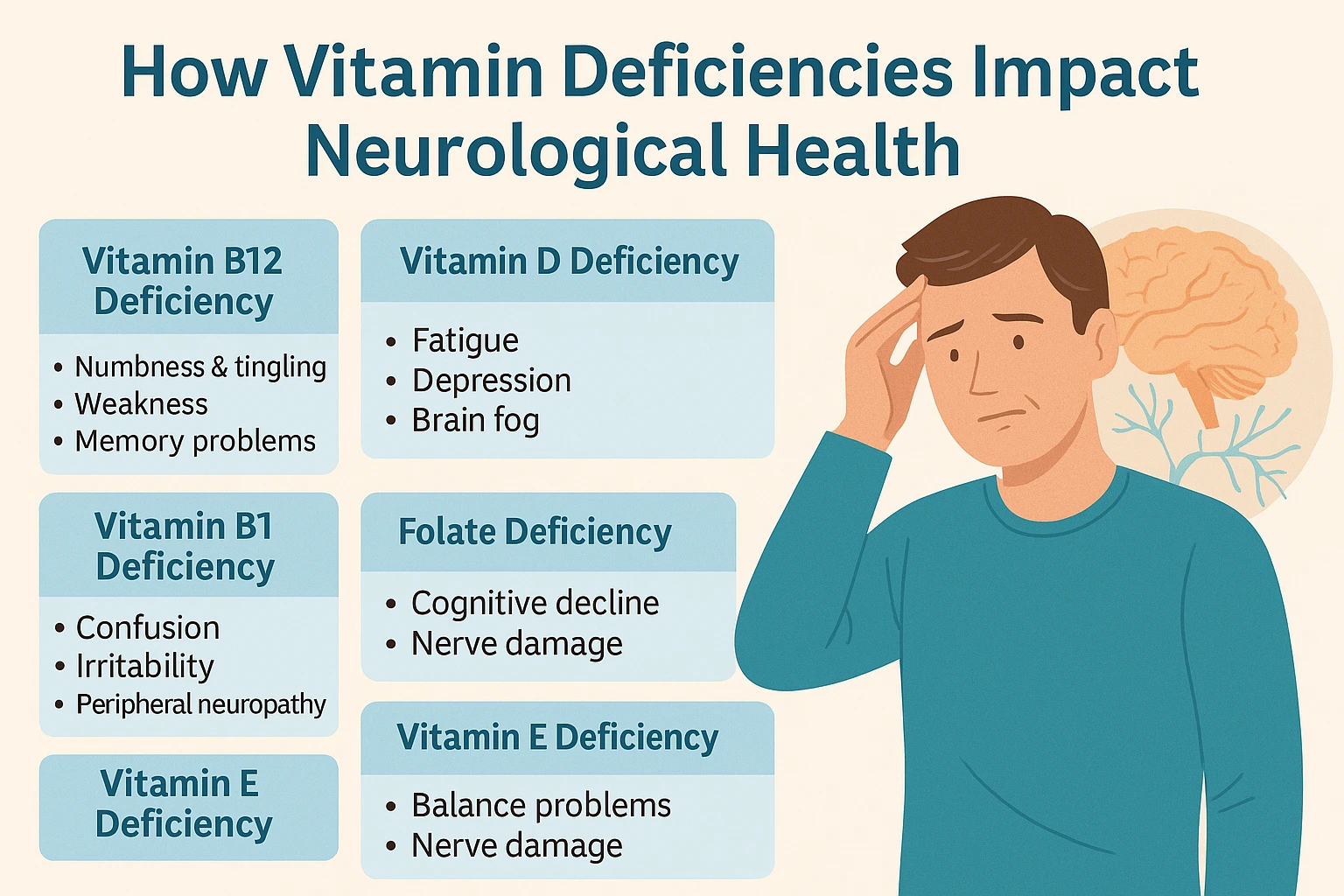
ICMR-NIN research links deficiencies in vitamins D, B2, B6, B9, and B12 to cognitive decline and elevated dementia risk in older Indians, with 36.4% of surveyed adults showing mild cognitive impairment.
Which Vitamin Deficiencies Drive Cognitive Decline in Older Indians? What the ICMR-NIN Study Shows
Deficiencies in vitamins D, B2 (riboflavin), B6, B9 (folate), and B12 are significantly more prevalent among older Indian adults experiencing cognitive decline, according to two linked studies from the ICMR-National Institute of Nutrition (ICMR-NIN) published in 2026. The more detailed of these — a community-based study of 184 adults aged 55 to 85 in Hyderabad — found that 36.4% of participants had mild cognitive impairment (MCI), with vitamin D and B6 levels showing the strongest positive association with cognitive performance. A companion study of 570 middle-aged and older adults across rural and urban Telangana found that nearly 40% were classified as having a higher predicted risk of dementia, with deficiencies in vitamins D, B2, B6, and B12 markedly more common in that high-risk group.
The table below summarises the key findings across both studies side by side.
| Feature | MCI Neuronal Biomarker Study (Nutrients) | Dementia Risk Study (Lancet Regional Health–SE Asia) |
|---|---|---|
| Sample size | 184 adults | 570 adults |
| Age range | 55–85 years | 40–80 years |
| Setting | Hyderabad (urban) | Rural and urban Telangana |
| Cognitive tool used | Montreal Cognitive Assessment (MoCA) | MoCA + modified CAIDE score |
| Prevalence of impairment/risk | 36.4% had MCI | ~40% classified as higher dementia risk |
| Key deficient vitamins identified | D, B1, B2, B6, B9, B12 (D, B2, B9 most prevalent) | D, B2, B6, B12 |
| Strongest protective association | Vitamins D and B6 | Dietary diversity, fruits and vegetables |
| Rural–urban difference noted | Not primary focus | Rural participants more deficient |
| Neuronal biomarkers measured | Beta-amyloid, tau, NfL, BDNF | Not reported |
| Published in | Nutrients | Lancet Regional Health–Southeast Asia |
| Collaborating institutions | ICMR-NIN | ICMR-NIN, Stanford, Karolinska Institute |
What is mild cognitive impairment, and why does it matter for Indian ageing?
Mild cognitive impairment is an intermediate stage between normal ageing and dementia, in which individuals experience measurable changes in memory and thinking but can still perform daily activities independently. This distinction is clinically important: MCI does not equal dementia, but it substantially raises the probability of progressing to it. Identifying MCI early — and addressing modifiable contributors like nutritional deficiency — represents one of the few windows where intervention may genuinely alter the trajectory.
India's demographic shift makes this urgent. Rising life expectancy is producing a rapid increase in the proportion of older adults, accompanied by a growing burden of age-related non-communicable diseases including dementia. Low- and middle-income countries such as India account for nearly 60% of the global dementia burden, yet disease-modifying therapies remain limited. Prevention through early identification of modifiable risk factors — nutrition among them — is therefore not a secondary concern but a primary public health strategy.
The ICMR-NIN research is notable precisely because it was conducted in Indian community settings, using culturally adapted tools, rather than extrapolating from Western cohorts whose diets, sun exposure patterns, and genetic backgrounds differ substantially from the Indian population.
How was the MCI study designed, and what did researchers actually measure?
The MCI-focused study — published in Nutrients under the title Neuronal Biomarkers and Micronutrient Status in Adults with Mild Cognitive Impairment — was a community-based cross-sectional study involving 184 adults aged 55 to 85 years from Hyderabad. Cognitive function was assessed using the Montreal Cognitive Assessment (MoCA), a widely validated screening tool sensitive to early cognitive changes.
Blood samples were analysed for seven vitamins: A, D, B1 (thiamine), B2 (riboflavin), B6 (pyridoxine), B9 (folate), and B12 (cobalamin). Researchers also measured a panel of neuronal biomarkers — beta-amyloid, total tau, neurofilament light chain (NfL), and brain-derived neurotrophic factor (BDNF) — that are increasingly used as biological indicators of neurodegeneration. Anthropometric measurements, blood pressure, and blood glucose levels were collected to identify confounding factors.
This multi-layered design — combining nutritional biochemistry with neuronal biomarkers and cognitive assessment — gives the study more mechanistic depth than a simple dietary survey. It allows researchers to ask not just whether vitamin levels are low in people with MCI, but whether those levels correlate with the biological processes known to underlie neurodegeneration.
Which specific vitamins were most deficient in people with cognitive impairment?
Among the 36.4% of participants who met criteria for MCI, blood levels of vitamins D, B1, B2, B6, B9, and B12 were all lower than in cognitively intact participants. Deficiencies in vitamins D, B2, and B9 were particularly more prevalent among the MCI group, suggesting these three may be especially relevant markers of risk.
When researchers looked at which vitamins were most strongly associated with better cognitive performance — rather than just with impairment — vitamins D and B6 emerged as the most significant positive predictors. This distinction matters: a nutrient can be deficient in the MCI group without being the strongest driver of performance variation. The D and B6 finding suggests these two vitamins may have a more direct relationship with the neural processes supporting cognition.
Participants with MCI also had significantly higher blood glucose levels and elevated systolic blood pressure — two well-established vascular risk factors for cognitive decline — reinforcing that nutritional deficiency does not operate in isolation but compounds metabolic and cardiovascular risk.
Vitamin D and the brain: what the biology suggests
Vitamin D is a fat-soluble secosteroid hormone that, beyond its classical role in calcium metabolism, acts on receptors throughout the central nervous system. Vitamin D receptors are expressed in the hippocampus, cerebral cortex, and cerebellum — regions central to memory and executive function. Animal and in-vitro studies suggest vitamin D modulates neurotrophin synthesis, reduces neuroinflammation, and may limit beta-amyloid accumulation.
Earlier Indian research supports the ICMR-NIN findings. A 2015 study from Mumbai published in the Annals of Indian Academy of Neurology found that vitamin D levels were significantly lower in elderly Indians with cognitive decline compared to cognitively intact controls, positioning vitamin D as a potential marker of cognitive ageing in the Indian population specifically. India's paradox — abundant sunlight yet widespread vitamin D deficiency — is partly explained by melanin-mediated reduction in cutaneous synthesis, clothing practices, indoor lifestyles, and low dietary fat intake that limits absorption of this fat-soluble vitamin.
B vitamins and one-carbon metabolism
Vitamins B2, B6, B9, and B12 are all involved in one-carbon metabolism, the biochemical pathway governing methylation reactions throughout the body, including in the brain. Disruption of this pathway elevates homocysteine, an amino acid that at high concentrations is neurotoxic and associated with accelerated brain atrophy and increased dementia risk. This mechanistic link is one reason the B-vitamin cluster appears repeatedly in cognitive ageing research.
B9 (folate) is a direct methyl donor in the pathway; B12 is required for the enzyme that converts homocysteine to methionine; B6 is needed for an alternative route that converts homocysteine to cysteine; and B2 is a cofactor for the enzyme MTHFR, which activates folate for use in the pathway. Their co-deficiency in the MCI group is therefore not coincidental — it reflects a shared dietary and metabolic vulnerability.
What did the larger dementia-risk study find, and how does it extend the picture?
The companion study, published in The Lancet Regional Health–Southeast Asia, took a broader population-level view. Involving 570 middle-aged and older adults aged 40 to 80 years from rural and urban settings in Telangana, it used a modified version of the Cardiovascular Risk Factors, Ageing and Incidence of Dementia (CAIDE) score — a validated dementia risk prediction tool — adapted for the Indian cultural context.
Nearly 40% of participants were classified as having a higher predicted risk of dementia. Those in the higher-risk group showed significantly poorer nutritional status overall. Deficiencies of vitamins D, B2, B6, and B12 were markedly more prevalent among those with higher dementia risk scores. Beyond individual vitamins, the high-risk group also had lower dietary diversity, higher consumption of saturated fats, and lower intake of unsaturated fats — a dietary pattern consistent with processed and low-variety food environments.
A particularly important finding was the rural–urban gradient: vitamin deficiencies were more common among rural participants than their urban counterparts, highlighting rural-specific vulnerabilities that may contribute to increased dementia risk. Rural populations in India often have limited access to diverse food sources, healthcare screening, and supplementation programmes, making them disproportionately exposed to the compounding effects of nutritional deficiency and vascular risk. This has direct implications for where public health interventions should be targeted.
The study was conducted in collaboration with investigators from Stanford Center for Innovation in Global Health and the Karolinska Institute in Sweden.
What are neuronal biomarkers, and what did they reveal?
The MCI study's inclusion of neuronal biomarkers is one of its more technically sophisticated features. A neuronal biomarker is a measurable biological indicator — typically a protein detectable in blood or cerebrospinal fluid — that reflects the health or integrity of neurons and neural tissue. The four measured in this study were:
- Beta-amyloid: a peptide that aggregates into plaques in Alzheimer's disease; abnormal blood levels may signal early pathological change.
- Total tau: a protein that stabilises neuronal microtubules; elevated levels indicate neuronal damage or death.
- Neurofilament light chain (NfL): released into blood when axons are damaged; a sensitive marker of neurodegeneration across multiple conditions.
- Brain-derived neurotrophic factor (BDNF): a protein that supports neuronal survival and plasticity; lower levels are associated with cognitive decline and depression.
The study found significant associations between blood levels of these neuronal biomarkers and both vitamin status and cognitive performance. The paper does not report that any single vitamin directly normalised biomarker levels, but the correlation between nutritional status and biomarker profiles adds a biological plausibility layer to the observational findings — suggesting that vitamin deficiencies may be operating through pathways that measurably affect neuronal health, not merely correlating with worse MoCA scores.
What are the limitations of these studies, and what can't we conclude yet?
Both studies are cross-sectional in design, meaning they capture a snapshot in time rather than following participants over years. This is the central limitation: the cross-sectional design restricts the ability to draw causal inferences. Cognitive decline itself may lead to poorer dietary behaviour, which then produces vitamin deficiencies, rather than the deficiencies causing the decline. Reverse causation cannot be ruled out.
The MCI study's sample of 184 adults from a single city limits generalisability across India's vast dietary and geographic diversity. The dementia-risk study's 570-person sample from Telangana is larger and includes rural participants, but Telangana is one state among many. Dietary patterns in Kerala, Punjab, or the Northeast differ substantially and may produce different micronutrient profiles.
Lead researcher G. Bhanuprakash Reddy acknowledged this directly: "While further studies and trials are needed to establish causality and assess the impact of nutrient supplementation, these findings show the value of early nutritional assessment and timely interventions as part of healthy ageing strategies."
What the studies do establish with reasonable confidence is that vitamin deficiency and cognitive impairment co-occur at high rates in Indian older adults, that specific vitamins — particularly D and B6 — show the strongest associations with cognitive performance, and that rural populations face greater nutritional vulnerability. These are sufficient grounds for clinical action even before randomised trial evidence matures.
What do these findings mean for clinical practice and public health?
ICMR-NIN Director Bharati Kulkarni framed the practical implication clearly: "Healthy ageing requires attention not only to disease management but also to nutritional well-being. Our findings highlight the importance of maintaining adequate micronutrient status and strengthening early nutritional assessment among older adults to support cognitive health and promote healthy ageing."
Dr Kulkarni also noted that given the limited availability of effective disease-modifying therapies for dementia, prevention through early identification of risk factors becomes increasingly important — positioning nutritional screening not as a luxury but as a frontline tool in geriatric care.
Several practical implications follow from the research.
Nutritional screening should be integrated into routine geriatric assessments. Blood levels of vitamins D, B2, B6, B9, and B12 are measurable with standard laboratory tests. Including these in annual health checks for adults over 55 — particularly those with hypertension, diabetes, or a family history of dementia — would allow early identification of deficiency before cognitive symptoms appear.
Dietary diversity is a modifiable target. The dementia-risk study found that diets rich in micronutrients, particularly fruits and vegetables, were associated with lower dementia risk factor burden. This is an actionable message that does not require supplementation and aligns with existing dietary guidance. India's traditional vegetable-rich diets, when maintained, may offer protective nutritional profiles — but economic constraints, urbanisation, and the shift toward processed foods are eroding this advantage.
Rural populations need targeted interventions. The rural–urban gradient in vitamin deficiency identified in the Telangana study suggests that community-level programmes — fortification, supplementation outreach, or dietary counselling — should prioritise rural older adults who face compounded disadvantages in food access and healthcare.
Supplementation remains an open question. The studies identify association, not proven benefit from supplementation. Randomised controlled trials testing whether correcting vitamin D, B6, or B9 deficiency slows cognitive decline in Indian older adults are needed before supplementation can be recommended as a standard intervention. That said, correcting a documented deficiency in an older adult is generally safe and clinically reasonable even in the absence of dementia-specific trial data, particularly for vitamins with well-established safety profiles like B9 and B12.
How does this fit into the broader global evidence on vitamins and cognition?
The ICMR-NIN findings are consistent with a substantial international literature. Vitamin D insufficiency has been linked to cognitive decline in multiple prospective cohort studies across Europe, North America, and Asia. The VITACOG trial, a randomised controlled trial from Oxford, demonstrated that high-dose B-vitamin supplementation (B6, B9, B12) slowed brain atrophy and cognitive decline in older adults with elevated homocysteine — providing some of the strongest causal evidence to date that the B-vitamin pathway matters.
What makes the ICMR-NIN work distinctive is its Indian specificity. The prevalence of vitamin D deficiency in India is paradoxically high despite tropical geography, and the dietary patterns that drive B-vitamin deficiency here — heavy reliance on polished rice, limited legume and green vegetable intake in some populations, and widespread vegetarianism that can limit B12 — differ from those in Western cohorts. Findings from European or American studies cannot be straightforwardly applied to Indian populations, making this domestic research particularly valuable.
The inclusion of neuronal biomarkers like BDNF and NfL also positions the ICMR-NIN study at the frontier of nutritional neuroscience methodology. Most nutritional epidemiology studies rely solely on cognitive test scores; measuring biological markers of neuronal integrity alongside dietary variables allows researchers to begin mapping mechanistic pathways, not just statistical associations.
What should older adults and their families do with this information?
The research does not support self-prescribing high-dose vitamin supplements based on a news report. What it does support is a more proactive conversation with a physician or dietitian about nutritional status — particularly for adults over 55 with a history of poor dietary diversity, limited sun exposure, elevated blood glucose, high blood pressure, or a family history of dementia.
A serum 25-hydroxyvitamin D test, a complete blood count (which can flag B12 and folate deficiency through red cell changes), and a direct serum B12 assay are all widely available in Indian diagnostic laboratories at modest cost. Combined with a dietary history, these tests can identify deficiency states that are straightforwardly correctable.
For those interested in the broader space of nutritional supplements relevant to Indian health contexts, the evidence base for specific nutrients continues to grow — including research on magnesium's role in sleep and neurological function and berberine's effects on insulin resistance and blood glucose, both of which intersect with the metabolic risk factors identified in the ICMR-NIN dementia study.
The core message from the ICMR-NIN research is not alarmist but actionable: nutritional well-being is not separate from brain health — it is part of it. In a country where more than a third of surveyed older adults already show signs of cognitive impairment, and where nearly 40% may be on a trajectory toward dementia, the window for nutritional intervention is earlier than most clinical practice currently reflects.
Sources
- ICMR-NIN study links vitamin deficiencies to cognitive decline in elderly – The Hindu
- ICMR-NIN Study Links Micronutrient Deficiencies To Increased Dementia Risk – BW Healthcareworld
- ICMR-NIN study links micronutrient deficiencies to higher dementia – ET Healthworld
- Vitamin D as a marker of cognitive decline in elderly Indian population – PMC / Annals of Indian Academy of Neurology