India's EBF rate dropped from 63.7% to 55.8% between NFHS-5 and NFHS-6, driven by postnatal support gaps, rising C-sections, and economic pressures forcing early return to work.
India's exclusive breastfeeding rate, the proportion of infants under six months receiving only breast milk, has fallen to 55.8%, down from 63.7% in NFHS-5. This decline arrives at a paradoxical moment: institutional deliveries now exceed 90%, early breastfeeding initiation has improved, and women's empowerment indicators are at historic highs. Yet fewer Indian infants are receiving the one intervention the World Health Organization and UNICEF rank among the most cost-effective in child survival.
The table below summarises the key breastfeeding and maternal health indicators across the two most recent survey rounds, alongside state-level snapshots that illustrate how unevenly the decline has landed.
| Indicator | NFHS-5 (2019-21) | NFHS-6 (2023-24) | Change |
|---|---|---|---|
| Exclusive breastfeeding (national, <6 months) | 63.7% | 55.8% | ▼ 7.9 pp |
| Early initiation of breastfeeding (within 1 hour) | 41.8% | 50.1% | ▲ 8.3 pp |
| Institutional deliveries | ~88% | 90.6% | ▲ ~2.6 pp |
| C-section deliveries | 21.5% | 27.2% | ▲ 5.7 pp |
| EBF, Uttar Pradesh | 59.7% | 34.6% | ▼ 25.1 pp |
| EBF, Haryana | 69.5% | 41.2% | ▼ 28.3 pp |
| EBF, Delhi | 64.3% | 54.0% | ▼ 10.3 pp |
| EBF, rural India | 65.1% | 56.2% | ▼ 8.9 pp |
| EBF, urban India | 59.6% | 54.5% | ▼ 5.1 pp |
| Women using internet | 33.3% | 64.3% | ▲ 31 pp |
| Women participating in household decisions | N/A | ~89% | N/A |
Sources: The Hindu / NFHS-6 data; Kharod Patel, JPCHR 2026
What exactly is exclusive breastfeeding, and why does it matter so much?
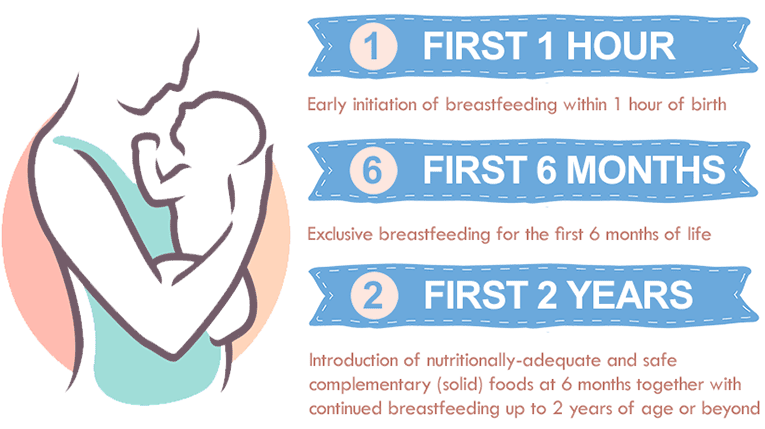
Exclusive breastfeeding means feeding an infant only breast milk (including expressed milk) for the first six months of life, with no supplementation of water, other liquids, or solid foods except for oral rehydration salts, drops, or syrups containing vitamins, minerals, or medicines. The WHO and UNICEF recommend initiating breastfeeding within one hour of birth and continuing exclusively for six months, followed by continued breastfeeding alongside appropriate complementary foods for up to two years or beyond.
Breast milk delivers all the macro- and micronutrients an infant requires in the first half-year of life. It contains maternal antibodies that protect against diarrhoeal disease and acute respiratory infections, the two leading causes of under-five mortality in low- and middle-income countries. Research consistently links EBF to lower rates of malnutrition, stunting, and infant mortality, and to better neurodevelopmental outcomes in later childhood.
For mothers, breastfeeding accelerates uterine recovery after delivery and is associated with reduced lifetime risk of breast and ovarian cancers. It is also cost-free at the point of use, a meaningful advantage in households where infant formula can consume a significant share of monthly income.
EBF rates are tracked as a composite indicator of child nutrition, maternal health system quality, and social support infrastructure. A falling EBF rate signals that something in the space surrounding new mothers is failing.
What does NFHS-6 actually show, and how does it compare with previous surveys?
NFHS-6 shows India's exclusive breastfeeding rate fell to 55.8%, down nearly eight percentage points from 63.7% in NFHS-5, even though almost every other maternal and child health indicator improved. The National Family Health Survey is a large-scale, multi-round, nationally representative household survey conducted in India since 1992-93, providing state and national data on fertility, infant and child mortality, family planning, maternal and child health, nutrition, anaemia, and quality of health services. It is one of the largest and most wide-ranging health surveys in the world.
NFHS-6, conducted in 2023-24, recorded a national EBF rate of 55.8%, a fall of nearly eight percentage points from the 63.7% recorded in NFHS-5 (2019-21). This interrupts a positive trajectory that had been building over the previous decade, arriving despite measurable gains in almost every other maternal and child health indicator the survey tracks.
The state-level picture is more alarming. Uttar Pradesh saw EBF collapse from 59.7% to 34.6%, a drop of more than 25 percentage points. Haryana fell from 69.5% to 41.2%. Delhi dropped from 64.3% to 54%. Rajasthan and Madhya Pradesh also recorded declines. These are India's most populous states, and their combined demographic weight pulls the national average down sharply.
Not every state moved in the same direction. Kerala, Gujarat, and West Bengal registered improvements in EBF rates, evidence that the decline is not inevitable and that state-level policy and health system factors matter. The contrast between these states and the large north-Indian states deserves systematic study; the data currently available do not fully explain what Kerala or Gujarat are doing differently.
EBF in rural India fell from 65.1% to 56.2%, while urban India saw a smaller decline from 59.6% to 54.5%. Historically, rural breastfeeding rates have been higher and more stable than urban ones, sustained by traditional support networks and lower formula penetration. The steeper rural decline suggests those protective factors are eroding faster than expected.
Why is EBF falling even as institutional deliveries and women's empowerment improve?
EBF is falling because empowerment alone cannot offset the economic pressures many mothers face: informal employment, little or no maternity protection, weak workplace support, and limited postnatal help all cut exclusive breastfeeding short. This is the central paradox of the NFHS-6 breastfeeding data. More births happen in hospitals where lactation support is theoretically available, more women are educated and financially included, and government maternity programmes have expanded. Yet the outcome is moving in the wrong direction.
Paediatrician and public health advocate Arun Gupta, recognised for decades of work promoting breastfeeding in India, frames the issue directly: "The decline in EBF despite these improvements indicates that empowerment alone may not be sufficient. Growing economic pressures, informal employment, lack of maternity protection, inadequate workplace support and limited postnatal assistance continue to constrain many mothers' ability to exclusively breastfeed their infants for the recommended first six months."
Saritha, a 27-year-old domestic worker in Delhi, illustrates the structural bind many mothers face. She returned to work within two months of each delivery because rent and living expenses could not be deferred. Her husband's income from ride-hailing and casual labour was insufficient to cover the household's costs, which included financially dependent in-laws. Introducing infant formula before six months was not a choice made from ignorance of breastfeeding's benefits. It was a rational response to an economic constraint that policy has not addressed.
This pattern is replicated across India's large informal labour force. Domestic workers, agricultural labourers, construction workers, and piece-rate garment workers have no access to paid maternity leave beyond the statutory minimum. Enforcement of even that minimum is weak in the unorganised sector. When income stops, breastfeeding often stops with it.
How do rising C-section rates contribute to the EBF decline?
Rising C-sections contribute because surgical delivery can delay the hormones that start lactation, while post-operative pain and limited mobility make early skin-to-skin contact and latching harder, so without skilled support the window to establish breastfeeding can close. C-section rates in India rose from 21.5% in NFHS-5 to 27.2% in NFHS-6, with surgical deliveries accounting for more than half of all births in private hospitals. Surgical delivery can delay the hormonal cascade that initiates lactation. Anaesthesia, post-operative pain, and restricted mobility in the immediate post-surgical period can make skin-to-skin contact and early latching difficult. Without immediate, skilled lactation support in the recovery room and on the postnatal ward, the critical window for establishing breastfeeding can close before it opens.
Dr. Anil Bansal of the Delhi Medical Association identifies the key clinical barriers: "Common medical reasons for not being able to exclusively breastfeed include delayed initiation of breastfeeding after delivery, especially following a C-section; perceived or actual low milk supply; lack of breastfeeding counselling and family support; maternal illness or complications; and difficulties faced by premature or low birth weight infants."
The word "perceived" matters. Many mothers who believe they have insufficient milk supply are experiencing a transient, correctable issue, one that skilled lactation counselling can resolve. But if the counsellor is not present, or if the hospital's default response is to offer formula supplementation, the mother's confidence in her ability to breastfeed is undermined before it is established.
Vandana, a 32-year-old HR consultant, experienced this directly after her C-section. Despite skin-to-skin contact and frequent feeding attempts, she could not produce enough milk to meet her baby's needs and moved to supplementation. She reflects that earlier, more intensive counselling might have changed the outcome. Her case is not unusual. It points to a gap in postnatal care that exists even in urban, educated, relatively resourced households.
What role does the informal economy and lack of maternity protection play?
The informal economy plays a decisive role: most Indian mothers work in jobs the Maternity Benefit Act does not cover, so they return to work within weeks of delivery out of economic necessity, and exclusive breastfeeding usually stops when the family depends on their income. India's Maternity Benefit Act provides 26 weeks of paid leave for women employed in establishments with ten or more workers. On paper, this is among the more generous provisions in the developing world. In practice, it covers a fraction of India's working mothers. The vast majority of Indian women work in the informal sector, as agricultural labourers, domestic workers, street vendors, and home-based piece workers, where the Act does not apply and where returning to work within weeks of delivery is an economic necessity, not a choice.
Even within the formal sector, the 2017 amendment extending leave to 26 weeks has had an unintended consequence: some employers, particularly smaller firms, have become reluctant to hire women of reproductive age, effectively pushing them toward informal arrangements that carry no maternity protection at all.
Nearly 89% of women now participate in key household decisions, and internet use among women has risen from 33.3% to 64.3%. These are real gains. But digital inclusion and decision-making agency do not translate into breastfeeding time if the mother must return to work at six weeks to keep the family housed and fed. Empowerment without economic security and workplace protection is incomplete.
The steeper decline in rural EBF rates is partly explained by increased migration and seasonal agricultural labour patterns. As rural households send members to cities for work, the traditional joint-family support structure (grandmothers, sisters-in-law, and other female relatives who historically helped new mothers with infant care and breastfeeding support) is fragmenting. A mother left alone with a newborn, without experienced support and under pressure to resume farm or domestic work, is far less likely to sustain exclusive breastfeeding for six months.
How does infant formula marketing affect breastfeeding decisions in India?
Formula marketing still shapes feeding decisions because India's strong IMS Act is enforced inconsistently, and newer digital channels plus greater rural availability normalise formula and lower the threshold at which mothers introduce it. India has the Infant Milk Substitutes (IMS) Act, described by public health advocates as one of the world's strongest legal frameworks restricting the promotion of infant formula. The Act prohibits advertising of formula products, free samples to healthcare facilities, and promotional contact between formula company representatives and mothers or healthcare workers. It is modelled on the International Code of Marketing of Breast-milk Substitutes adopted by the World Health Assembly in 1981.
Despite this legal framework, enforcement is inconsistent. Dr. Arun Gupta has stated that aggressive marketing of infant formula and substitutes can still undermine breastfeeding and should be strictly regulated. Digital marketing channels (social media, parenting apps, influencer content) have created new vectors for formula promotion that the original IMS Act did not anticipate and that regulators have been slow to address.
Greater penetration of packaged foods and formula products in rural markets, noted by health experts as a contributing factor to the rural EBF decline, reflects both marketing pressure and a broader shift in consumption norms. When formula is visible, affordable, and culturally normalised in a community, the threshold for introducing it falls, even among mothers who might otherwise have breastfed successfully with adequate support.
Cultural practices that predate formula marketing also undermine EBF. Giving newborns water, honey, animal milk, or other pre-lacteal feeds before six months remains common in parts of India, particularly in communities where these practices are embedded in ritual or tradition. These feeds displace breast milk, reduce feeding frequency, and can introduce pathogens, undermining both the duration and the exclusivity of breastfeeding.
What postnatal support infrastructure currently exists, and where are the gaps?
Postnatal support exists through conditional cash transfers, Anganwadi workers, and hospital-based Lactation Management Centres and Units, but the gaps are wide: this support is concentrated in cities and tertiary hospitals and often misses the rural community and primary health centres where most women deliver. India's postnatal support for breastfeeding operates through several channels. The Pradhan Mantri Matru Vandana Yojana provides conditional cash transfers to pregnant and lactating women. The Integrated Child Development Services network deploys Anganwadi workers who are theoretically trained to counsel mothers on infant feeding. Lactation Management Centres and Lactation Management Units (established in district hospitals and medical colleges) provide specialised lactation support and donor human milk for premature and unwell newborns when the mother's milk is unavailable.
These are meaningful investments. The gap between policy intent and ground-level delivery is wide, however. Anganwadi workers carry heavy workloads across multiple programmes and often lack the depth of lactation counselling training needed to address complex breastfeeding problems. Hospital-based lactation support is concentrated in tertiary facilities in larger cities; it is largely absent from the community health centres and primary health centres where most rural women deliver or receive postnatal care.
A peer-reviewed analysis of NFHS-4 and NFHS-5 data published in the International Breastfeeding Journal identified maternal education, birth order, place of delivery, and receipt of postnatal care as significant determinants of EBF in India. Women who received postnatal counselling were substantially more likely to exclusively breastfeed. The implication is clear: postnatal contact is a use point, and the quality and frequency of that contact matters as much as its existence.
Postnatal care in India is also structurally under-resourced relative to antenatal care. Antenatal visits are tracked, incentivised, and monitored through multiple programmes. Postnatal home visits by Accredited Social Health Activists (ASHAs) are mandated but inconsistently delivered, particularly in states with high ASHA vacancy rates or heavy programme burdens. A mother who leaves a facility 24-48 hours after delivery and receives no skilled follow-up in the first two weeks is navigating the most difficult phase of breastfeeding establishment without support.
Which states are bucking the trend, and what can India learn from them?
Kerala, Gujarat, and West Bengal improved their EBF rates even as the national average fell, and the likely lessons are strong female literacy, dense community health-worker networks, lower C-section rates, and Baby-Friendly Hospital practices. Kerala, Gujarat, and West Bengal registered improvements in EBF rates in NFHS-6, even as the national average fell. The data available do not provide a definitive explanation for this divergence, and caution is warranted about drawing strong causal conclusions from survey data alone. Several structural factors are plausible candidates.
Kerala's health system is characterised by high female literacy, strong community health worker networks, and a culture of health-seeking behaviour that extends into the postnatal period. Its relatively low C-section rates in public facilities and its tradition of Baby-Friendly Hospital Initiative accreditation may also contribute. Gujarat has invested in urban health infrastructure and community nutrition programmes. West Bengal has a dense ASHA network and a history of community-based maternal and child health programming.
The contrast with Uttar Pradesh and Haryana is instructive. Both states have large populations, high rates of informal employment, significant internal migration, and health systems that, despite recent improvements, still struggle with postnatal care quality and coverage. The 25-point drop in EBF in Uttar Pradesh is not simply a statistical anomaly; it reflects a real and large-scale failure to support mothers through the first six months of their infant's life.
For policymakers, the lesson is that national averages can mask catastrophic state-level reversals. Targeted, state-specific interventions, rather than uniform national programmes, are needed to address the structural drivers of EBF decline in the states where the fall has been steepest.
What do experts recommend to reverse the decline?
Experts recommend action on four fronts: better postnatal care quality and coverage, maternity protection for informal workers, tighter regulation of formula marketing in digital spaces, and reframing breastfeeding as a public health priority rather than an individual choice. The recommendations that emerge from NFHS-6 data and expert commentary cluster around four domains.
Postnatal care quality and coverage. The editorial published in the Journal of Public and Clinical Health Research in July 2026 calls for strengthening breastfeeding support, quality of care, and evidence-based public health interventions to sustain gains in child health. Concretely, this means trained lactation counsellors in every facility conducting deliveries, structured postnatal home visits within 48 hours and at one week after discharge, and integration of breastfeeding support into the routine work of ASHAs and Anganwadi workers with adequate training and supervision.
Workplace protection for informal workers. Extending some form of maternity protection (whether through social insurance, conditional cash transfers, or community-based support) to women in the unorganised sector is a precondition for sustained EBF among the majority of India's working mothers. The current framework leaves the most economically vulnerable mothers without any protection during the critical first six months.
Regulation of formula marketing in digital spaces. The IMS Act needs updating to cover social media, parenting apps, and influencer marketing. Enforcement mechanisms need strengthening, with clear penalties and independent monitoring. Dr. Gupta's call for strict regulation of formula marketing reflects a consensus among public health advocates that the current legal framework, however strong on paper, is not keeping pace with the marketing environment.
Reframing breastfeeding as a public health priority. Dr. Gupta argues that breastfeeding promotion should be viewed as a public health measure, not merely an individual lifestyle choice. This framing matters because it shifts responsibility from the individual mother, who is often doing everything she can within severe constraints, to the systems and policies that either enable or obstruct her ability to breastfeed. A mother who returns to work at six weeks because she has no maternity protection has not failed to breastfeed; the system has failed to support her.
What are the alternatives when breastfeeding is not possible?
When exclusive breastfeeding cannot be sustained, the WHO recommends infant formula as the appropriate alternative, not raw cow's milk, goat's milk, or plant-based milks, which do not provide the right balance of nutrients for infants under 12 months and may be difficult to digest. Some hospitals, particularly those with Lactation Management Units, provide pasteurised donor human milk for preterm and unwell newborns when the mother's own milk is unavailable. This is the closest nutritional equivalent to maternal breast milk and is the preferred alternative in clinical settings for vulnerable newborns.
Public health experts are careful to distinguish between formula as a medically indicated substitute and formula as a convenience product marketed to healthy mothers who could breastfeed with adequate support. The former is a legitimate and sometimes life-saving intervention. The latter represents a failure of the support system and, where aggressive marketing is involved, a commercial intrusion into a public health domain.
The data from NFHS-6 suggest that a significant proportion of the mothers who have moved to formula in the past five years are not doing so because breastfeeding was medically impossible. They are doing so because the economic, institutional, and social conditions that would enable sustained breastfeeding are absent. Addressing that absence is the central challenge that India's maternal health system must now confront.
The NFHS-6 breastfeeding data are a warning signal that deserves the same urgency as the more celebrated indicators in the survey. India has demonstrated that it can move the needle on institutional deliveries, immunisation, and women's financial inclusion. The same policy energy, applied to postnatal support, workplace protection, and formula marketing regulation, could reverse the EBF decline before the next survey round captures a further deterioration. The cost of inaction, in child health, in healthcare expenditure, and in the long-term developmental outcomes of millions of infants, is not abstract. It is already being measured.
This article is for general information and is not medical advice. Talk to a doctor or a registered dietitian before starting a supplement or changing any medication, especially if you are pregnant, taking prescription drugs, or managing a health condition.
Sources
- The missing link in India's maternal health story - The Hindu
- Exclusive breastfeeding practices and its determinants in Indian infants: findings from NFHS-4 and 5 - PMC / International Breastfeeding Journal
- Comparative Reflections on Breastfeeding Indicators: Insights from NFHS-5 and NFHS-6 - ResearchGate / Journal of Public and Clinical Health Research